
Do You Need a Permit to Remove a Deck? What Boise Homeowners Should Know
By Eric Hinderager, owner of Top Shelf Junk Removal and Demolition · Updated
Do you need a permit to remove a deck? Learn when Boise-area cities care, when they don't, and why utility lines and old footings matter more.
The answer to "do you need a permit to remove a deck" is often no, because local building departments tend to care far more about what you build than what you take away. Tearing out a standard wood deck often doesn't need any sign-off from the city, but it's worth confirming with yours. The permit question mainly comes up when the deck ties into the house up high, when your HOA has its own rules, or when you plan to rebuild in the same spot.
Do You Need a Permit to Remove a Deck in Boise?
For many homeowners, no. Local building departments generally focus their permit rules on new work, not on taking an old deck apart. Most jurisdictions won't require a permit just to pull up boards, joists and railings, but rules vary from city to city, so check with yours, whether that's Boise, Meridian or Nampa.
Pulling up a ground-level deck? Hauling off a raised one with nothing going back in its place? You're often fine to get started once you've confirmed with the city. Nobody's sending an inspector out to watch you unscrew joist hangers.
Where people trip up is assuming demolition follows the same rules as construction. It doesn't. Building a new deck over a certain height or size needs a permit and an inspection. Removing that same deck usually just needs the right tools and a plan for hauling it away.
When Removal Doesn't Require a Permit
Tearing down a standard wood deck, freestanding or attached at ground level, often doesn't call for a demolition permit. That tends to hold for backyard platforms, low patio decks and small landings by a back door.
- The deck sits close to the ground and doesn't hold up a roof or cover.
- Nothing is going back in its place, or you're just putting down gravel, pavers or a patio.
- There are no gas, sewer or power lines running under it.
When to Check the Permit Rules With the City
There are a handful of cases where a quick call to your local building department is worth it. Don't guess on these.
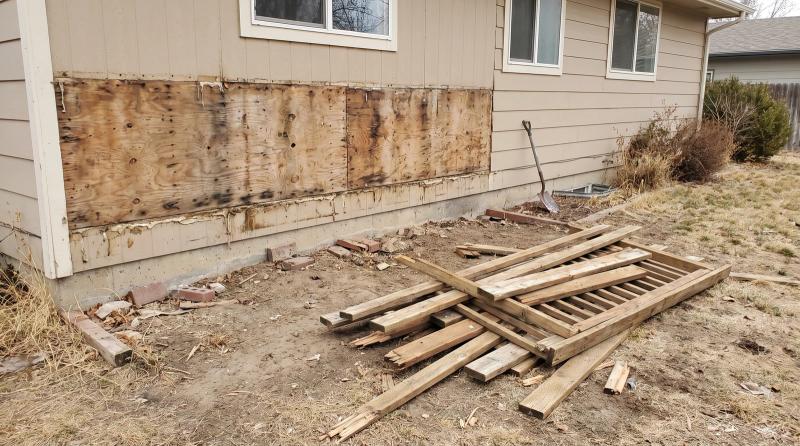
- Second-story or elevated house decks. When a deck ties into the structure well above grade, taking it off can affect the wall, the siding, or a door that now opens onto nothing. Some cities want eyes on how you close that up, and a permit for the repair may be required.
- HOA neighborhoods. Not a city permit, but plenty of subdivisions have rules about exterior changes. Your HOA might not care that the deck is gone, or they might want the patch to match the house. Check your covenants.
- Decks over or near utilities and easements. If your deck sits on top of a gas line, a sewer cleanout, or backs up to a utility easement, that changes things fast.
- Lots near a property line. A rebuild there might need a zoning permit or review.
When in doubt, the building department can usually tell you whether your project needs anything. That beats guessing.
Do You Need a Permit to Replace a Deck?
The permit question flips the second you plan to rebuild. If you're tearing down an old deck to put a new one in the same spot, the new deck likely needs a permit, and the city may want to see the old footings or the exposed ledger before you cover anything up.
Each city writes its own rules for building permits. In some places, all new decks require a permit no matter the size. Others only want one once a deck gets past a certain height, attaches to the wall of your home, or covers a certain amount of the yard. Don't assume all new decks require one, or that none do. If the new one is a simple low platform, you may not need a deck permit at all, but check first.
For raised house decks, a permit for new deck construction is required in many cities. Homeowners who build or rebuild without a needed permit may face penalties, and the unpermitted work can come back up when you sell.
Repairs sit in the middle. Replacing deck boards like-for-like generally does not require any sign-off, as long as the joists, beams and posts underneath stay put. Swapping out framing, footings or a ledger board is structural work, and a permit is often required for that.
How the Building Permit Process Works for a New Deck
The permit process for a rebuilt deck usually looks something like this:
- Check the permit requirements. Your city's building department can tell you what triggers a deck permit and what drawings they want to see.
- Submit a permit application. That usually means a simple drawing showing size, height, footings, framing and how the deck attaches.
- Get the plans approved. The city reviews them against the building code and local regulations.
- Schedule inspections. On many projects, an inspection during deck construction is required before footings get poured or framing gets covered.
If you're only removing the old one, you can often skip all of this. If you're rebuilding, start the permit process before the old deck comes down so the two pieces of work line up.
What Matters More Than the Deck Permit
Honestly? For most deck removals, the permit is the least of your worries. The footings and the utilities are what'll actually cause you a headache.
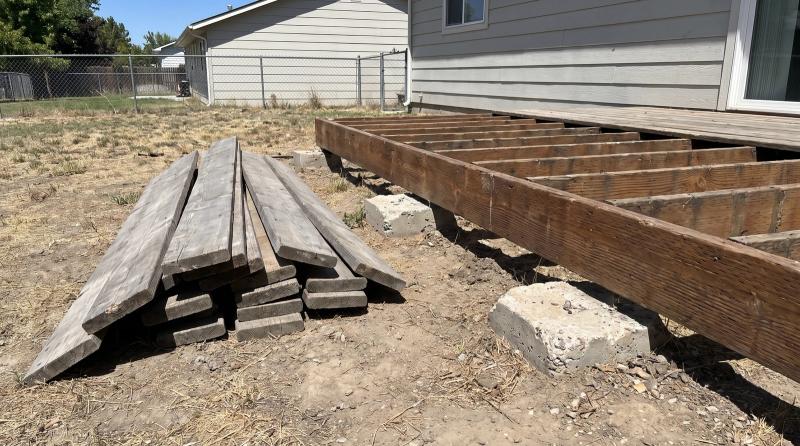
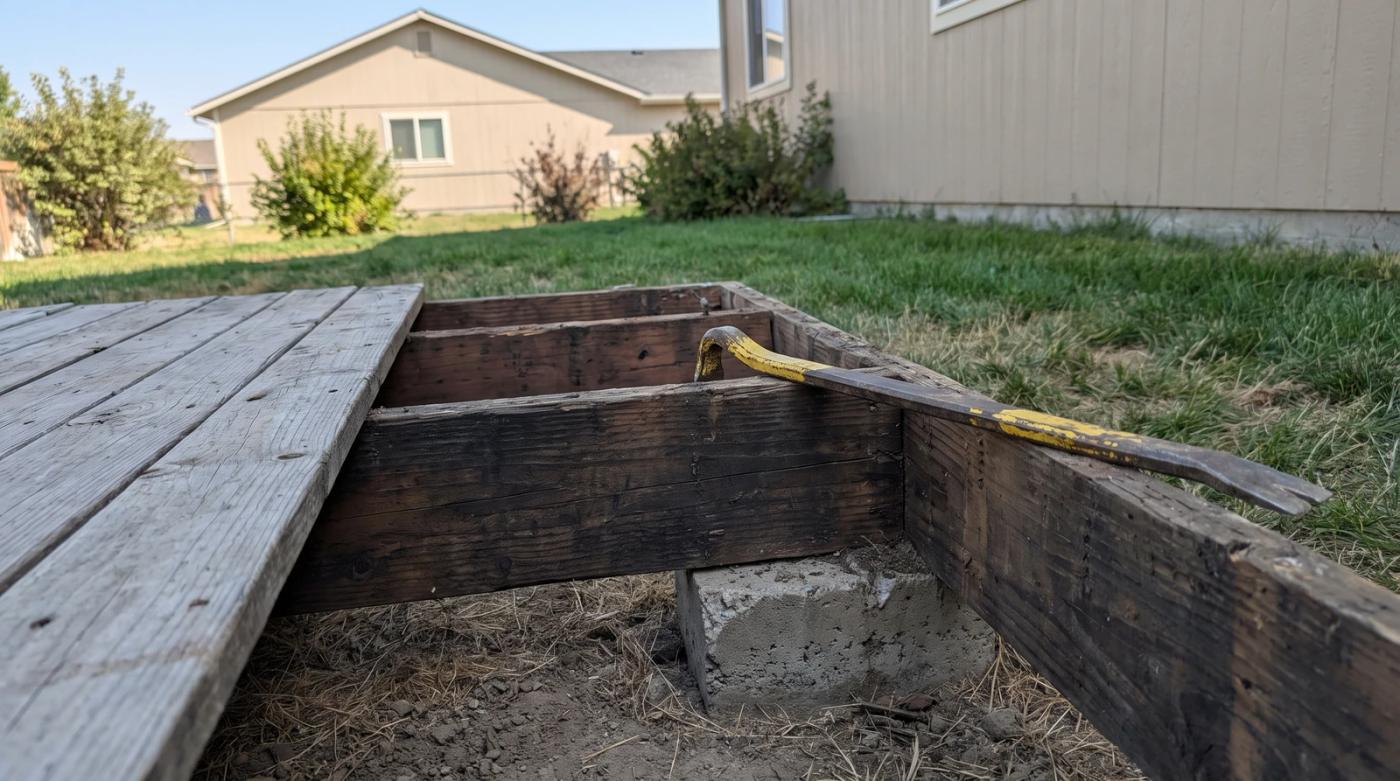
Older decks are often set on concrete footings, some poured well below the surface. Some are little pier blocks you can pop out with a pry bar. Others are full posts sunk in a bag of concrete that fight you the whole way.
Before anyone digs those out, call Digline at 811. The locate services are free, a locate is required by Idaho law, and it gets your buried utility lines marked so you don't clip one.
Footings can end up sitting a lot closer to a gas line than homeowners realize. That's not a permit problem. That's a call-the-fire-department problem. So locate first.
Most deck permit questions homeowners ask come down to one thing: are you building something back? Here's roughly how the pieces break down:
| Part of the job | Permit needed? | Real concern |
|---|---|---|
| Removing deck boards and framing | Usually no | Disposal and haul-off |
| Digging out concrete footings | Usually no | Utility lines (call 811) |
| Building a new deck | Usually yes | Inspection and footings |
| Patching siding or a door after | Sometimes | Weatherproofing |
Not every deck needs to come out, by the way. Sometimes what looks like a total loss just needs a few new boards and a coat of stain. But if it's soft, wobbly, or rotting where it meets the wall, a full deck removal is usually the better call over the long run.
What a Teardown Actually Involves
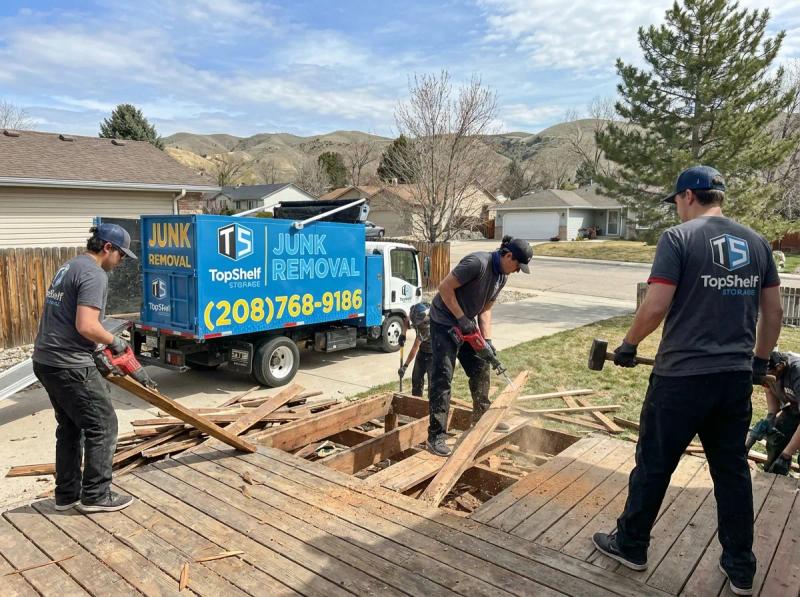
Top Shelf offers deck removal as part of its Demolition services, and the permit question is one of the first things we sort out. If a job needs a call to the city or a utility locate, it's better to know up front than to find out halfway through. When the demolition work needs a permit, we handle the permit paperwork for it.
We pull the whole thing, boards, joists, beams, and railings, right down to the footings. Those posts set in concrete get dug out, not snapped off at grade and left for you to trip over later. The Digline locate happens before anybody puts a shovel in the ground.
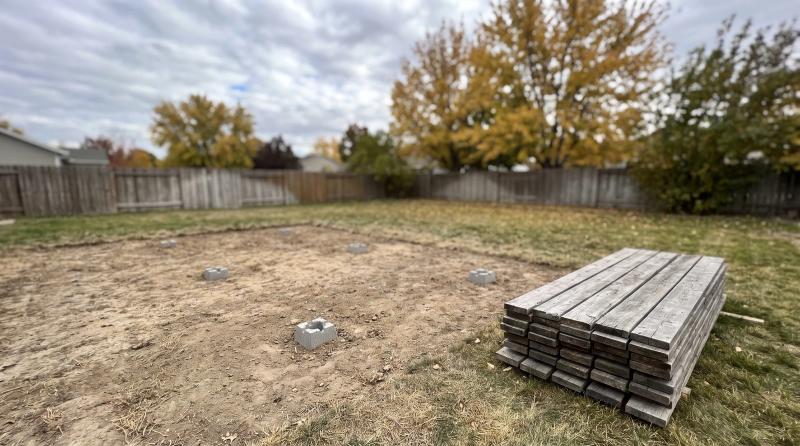
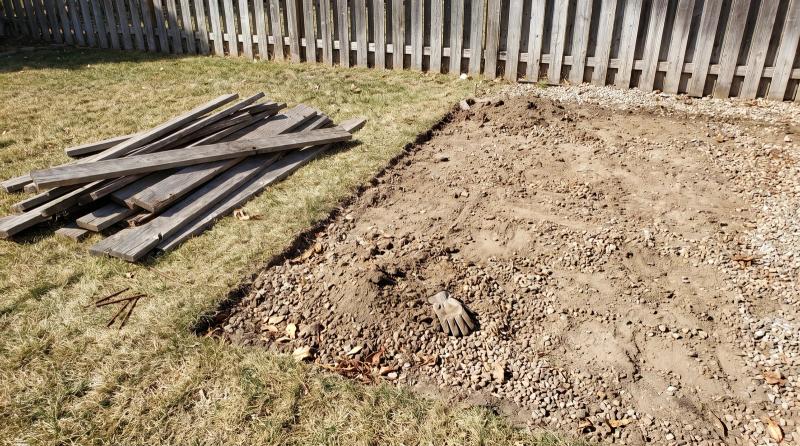
Then it all gets hauled off, with whatever can be recycled going to recycling, so nothing's left sitting on your property. The spot is left clear for grass, gravel, or whatever's going there next.
What a deck removal costs comes down to size, height, how much material there is to haul, and how stubborn those footings are. A small ground-level deck is a lighter project. A big two-story deck with concrete-set posts takes more work and more time, and the cost reflects that. You'll know the number before we start.
Deck Permit Questions People Ask
Can I just replace the boards on my deck?
Usually, yes. Replacing deck boards like-for-like generally does not require any sign-off, as long as the framing underneath is sound and stays in place. If the joists are rotten too, check with your building department first.
Is a permit required to replace a railing?
It depends on the city. New railings on a raised deck may have to meet current safety rules, so a permit could be required.
What are the permit requirements for a new deck?
Each city sets its own, but height, size and whether the deck attaches to your home are the usual triggers. A covered deck or porch can be treated differently too.
Do I need a permit for a deck that's falling apart?
Often not. A rotting deck can typically come down without a permit, but confirm with your city, and call Digline at 811 before anyone digs out footings.
Related reading: Chicken Coop Removal in Boise: Dust, Wire and Old Posts and Treehouse Removal in Boise: Saving the Tree It's Built In.
Not sure which bucket your deck falls into? Give us a call at (208) 593-2877. We'll ask a couple of questions about the project, help you figure out whether it's worth checking with the city, and quote it if you want. No pressure either way.
Need Help With Deck Removal?
Top Shelf serves Boise and the Treasure Valley with professional junk removal, cleanouts, and demolition services.