
Attic Cleanout Walking on Joists Boise: Is Your Attic Floor Safe?
By Eric Hinderager, owner of Top Shelf Junk Removal and Demolition · Updated
Attic cleanout walking on joists in Boise? Learn how to find the joists, check for moisture and mold, and plan insulation cleanup without falling through.
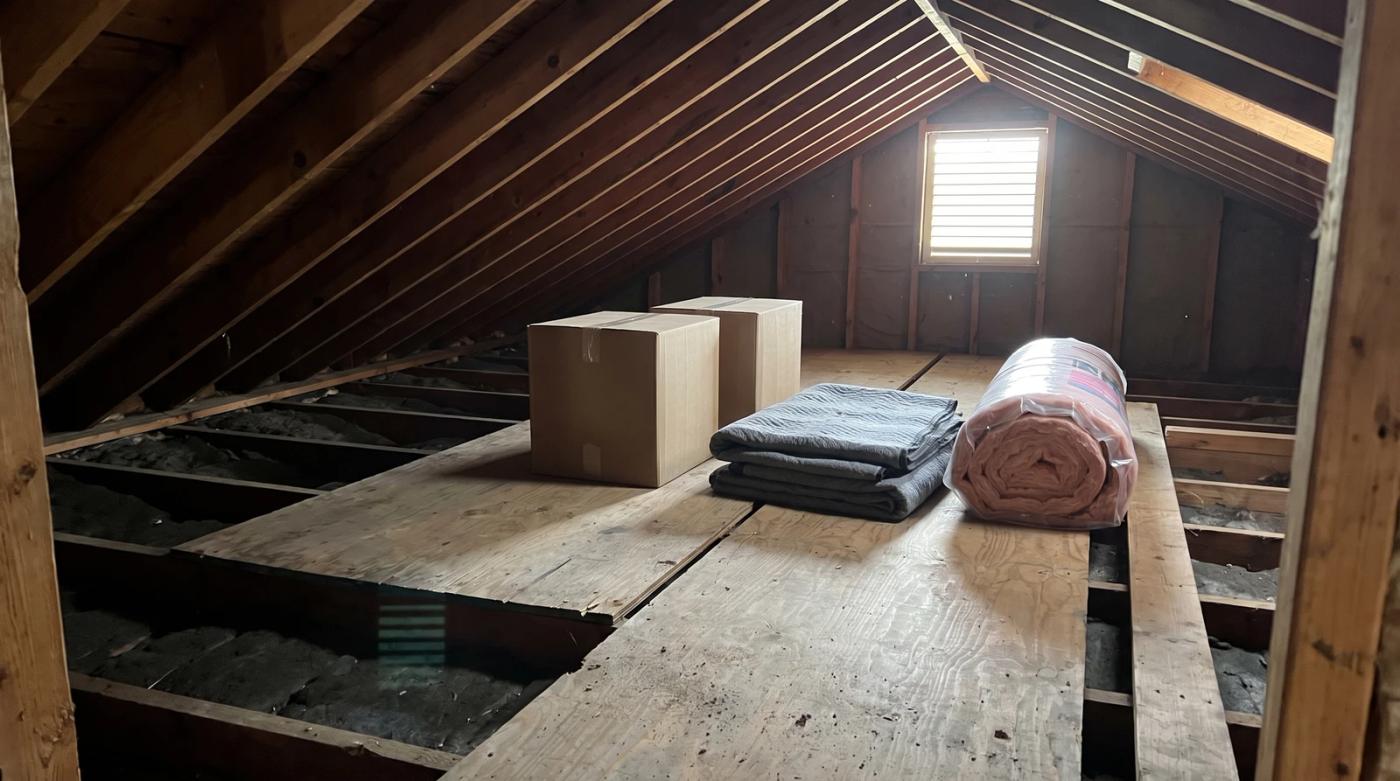
Attic cleanout walking on joists in Boise comes down to one rule: step only on the joists, never on the insulation or drywall between them. Most attics here have no real floor, so lay planks, find each joist before you trust it, and check for moisture and mold first. Get that right and the rest of the cleanup is mostly carrying boxes.
The usual mistake: someone steps off a joist onto bare drywall, and a boot comes through the bedroom ceiling below.
Patch, texture match, paint: the repair can cost more than the cleanout would have.
So before you drag anything out, the first question isn't what to keep. It's whether the spot you're about to stand on will hold you.
Attic cleanout walking on joists in Boise: why insulation isn't a floor
Most Boise attics don't actually have a floor
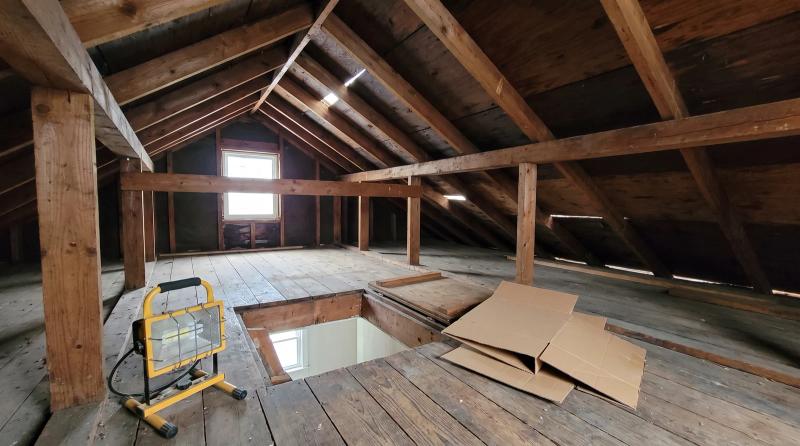
Climb into a typical Treasure Valley attic and there usually isn't a floor.
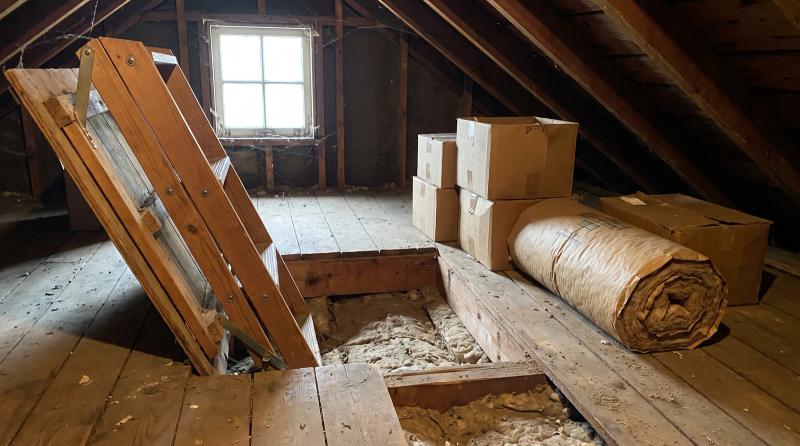
What you've got is ceiling joists, insulation packed between them, and thin drywall fastened to the underside. That drywall isn't structural. It's the ceiling of the room below, and it holds about as much weight as a wet paper plate.
In newer subdivisions around Meridian, Nampa, and Kuna, you'll often find roof trusses with blown-in fiberglass laid across the whole thing.
The insulation looks like a surface. It isn't. And you can't see the joists underneath it, which is the actual problem.
Older houses in the North End and on the Bench are often built differently, sometimes with a partial plank floor near the hatch. Easier to walk, sure, but those planks get brittle and the nails have had decades to work loose.
Loose fill hides the joists and the damage
Blown-in fiberglass or cellulose is called loose fill.
Heads up: Loose fill hides the gap between joists and any spot where somebody cut a joist for a bath fan or a can light. If you can't see wood, don't put weight on it. Poke around with a broom handle and find the joist before your foot does.
It hides moisture too. Wet fill packs down and turns dark, and mold can grow on the wood under it before you smell anything.
Quick checks before attic insulation cleanup starts
You don't need an inspector for this. A quick look with a flashlight tells you most of it.
- Look for solid decking, meaning plywood or OSB screwed down, not loose scraps laid on top of the insulation
- Check whether that decking actually reaches the stuff, or just covers the first few feet by the hatch
- Tap around with a broom handle to find your joist spacing, so you know your step length before you're committed
- Look up at the roof sheathing for dark staining or daylight, which means water or moisture has been getting in
- Note where the ducts and wires run, because those are what people catch a foot on
- Sniff for a musty smell and look for fuzzy spots on the wood, which can mean mold
Decking stops a few feet past the hatch and the boxes are sitting out in the blown-in? That's your answer. Not a walk-on attic.
Moisture checks to do before any cleanup
These tell you whether this is simple box hauling or a bigger job. Look for water stains on the roof deck, rusty nail tips, winter frost on the sheathing, and loose fill that's flat or damp. Any of those can feed mold.
Around Greater Boise, a common cause is a bath fan that blows wet air onto the insulation instead of outside. Blocked soffit vents and worn roof flashing are others.
If you find wet insulation, track down the cause first. Otherwise the water and the mold come back, and any mold removal is wasted.
Making insulation cleanup safer without decking the whole thing
You don't have to build a floor. Rip a couple of sheets of sturdy plywood into long strips and you've got plank runs you can lay across the joists and leapfrog as you work.
Lay two side by side. Then you always have somewhere for both feet plus somewhere to set the box down. Never set anything on the insulation. If it's on insulation, it's on drywall.
Slide boxes along the planks toward the hatch instead of hauling them across open joists. Falls tend to happen when somebody's arms are full and they can't see their feet.
A headlamp plus a work light bounced off the roof deck beats a phone flashlight, and a lot of missteps come from not seeing the joist.
Wear a good mask, gloves and long sleeves, since disturbed mold puts spores in the air.
Attics in the valley get dangerously hot on a July afternoon, and heat makes people hurry. Spring or fall mornings are easier.
What happens to affected insulation and mold?
Stored boxes are one job. Damaged insulation and mold are another, and they shouldn't be mixed into the same step.
When insulation removal is part of the job
Affected insulation is anything wet, matted flat, full of droppings or growing mold. Once moisture packs it down, it usually won't fluff back up or hold heat well.
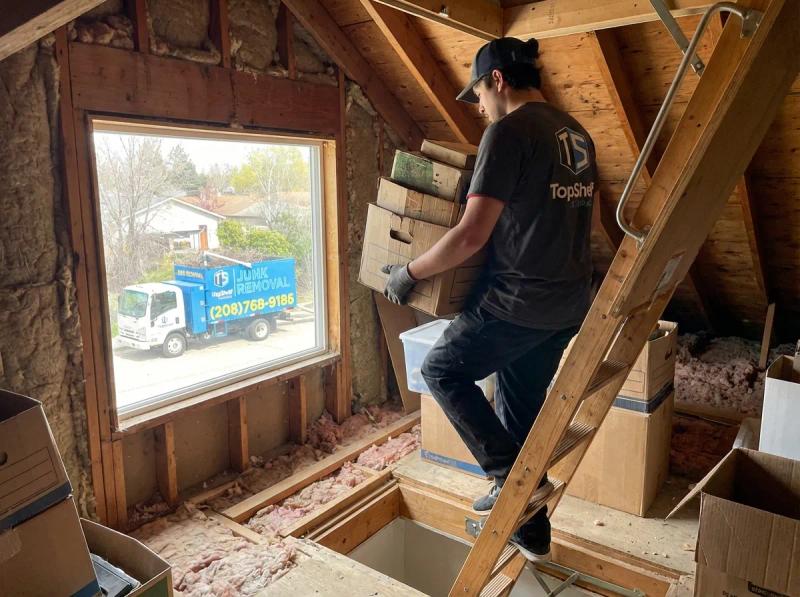
Loose fill usually comes out by vacuum: a big hose pulls it straight into bags. Batts come out by hand. Either way, it gets bagged in the attic, not dragged through the house, which keeps the mess downstairs small.
What moves the time and effort:
- How deep the affected insulation is and how much of the attic it covers
- How low the roof is and how tight the space feels
- Whether there's mold, which adds steps, gear and cleanup
Mold removal and insulation work go in this order
Mold removal is its own trade. A small spot on wood can sometimes be cleaned, but wider growth is work for a company that does it for a living.
- Fix the moisture source, whether that's a fan, a vent or a roof leak.
- Get the mold removal done and let the wood dry out.
- Clear out the old insulation.
- Then put in new insulation on clean, dry wood.
- Do final checks for damp spots, smell and daylight before the hatch closes.
Skip the first step and the mold grows back. Skip the final checks and you won't know if it held up.
Worth asking: If you hire any of this out, ask what each company handles, since junk removal, mold removal and insulation work are often separate crews.
What does the job look like when there's no decking?
When a crew gets up there for attic junk removal and finds bare joists, the job changes shape. Slower work, not impossible.
Plank runs have to be laid and moved along the way, which is why an undecked attic takes longer than a decked one holding the same amount of stuff. The price comes down to how much truck space the load fills.
Damp boxes tear on the ladder, so a wet load means slower work and more mess below.
Where everything goes after the cleanup
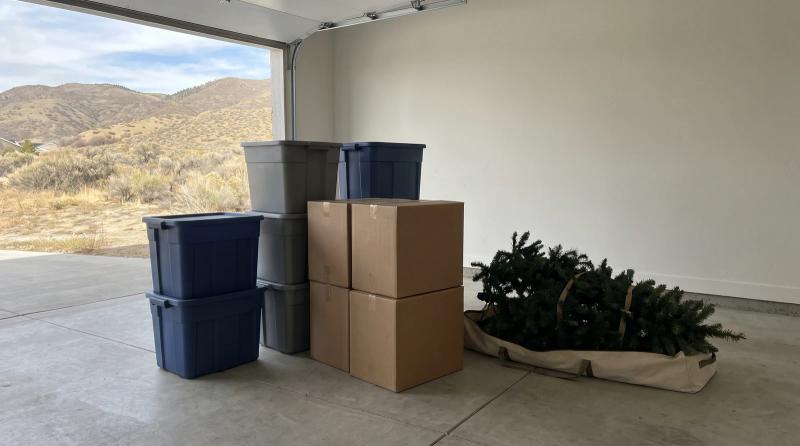
Sorting happens downstairs, not up in the dark. Usable furniture, holiday decor, and household goods can go to a donation center like Idaho Youth Ranch. Metal shelving, old ductwork, and window units can go to a metal recycler like Western Recycling; check what they accept first. Wet cardboard, ruined insulation, and anything a mouse has been living in goes to the Ada County landfill.
So should you hire it out? If your attic's decked and there's a reasonable amount up there, probably not. Do it yourself and keep the money.
Where calling somebody makes sense is bare joists, or a load big enough that you're looking at trip after trip down a ladder. That's the kind of attic job our cleanouts crew is set up for. Contaminated insulation goes to a company that does insulation work.
The bottom line: insulation is not a floor. Find the joists before you trust them, lay a couple of planks, check for moisture and mold, and move slow enough to see your feet.
If you'd rather not mess with it, call us at (208) 593-2877 and we'll tell you straight whether it's a Saturday afternoon or a job worth handing off. Either answer is fine with us.
Frequently asked questions about insulation cleanup
Can I do attic insulation cleanup myself?
Yes, if the insulation is dry and the area is small. Wet or mouse-filled material, or anything with mold, is better left to a crew with gear for bagged removal.
Do I need mold removal before insulation cleanup?
Yes, if there's mold on the wood or the insulation. Fix the moisture first, deal with the mold, then clear the old material and lay new insulation.
Is it safe to step between the joists?
No. Between the joists there's only insulation and drywall, and neither will hold you. Step only on wood or planks.
What are the final checks after an insulation cleanup?
The Cleanouts page covers what the service includes and how the estimate works.
Related reading: Thorough Property Cleanout: What Gets Cleared, Sorted and Hauled Away and Professional Cleanout Team: What They Do and How to Choose One.
Look for damp spots and daylight, sniff for a musty smell, and make sure the bath fan vents outside. Those checks tell you whether the moisture problem is gone and the job is done.
Need Help With Attic Cleanout?
Top Shelf serves Boise and the Treasure Valley with professional junk removal, cleanouts, and demolition services.