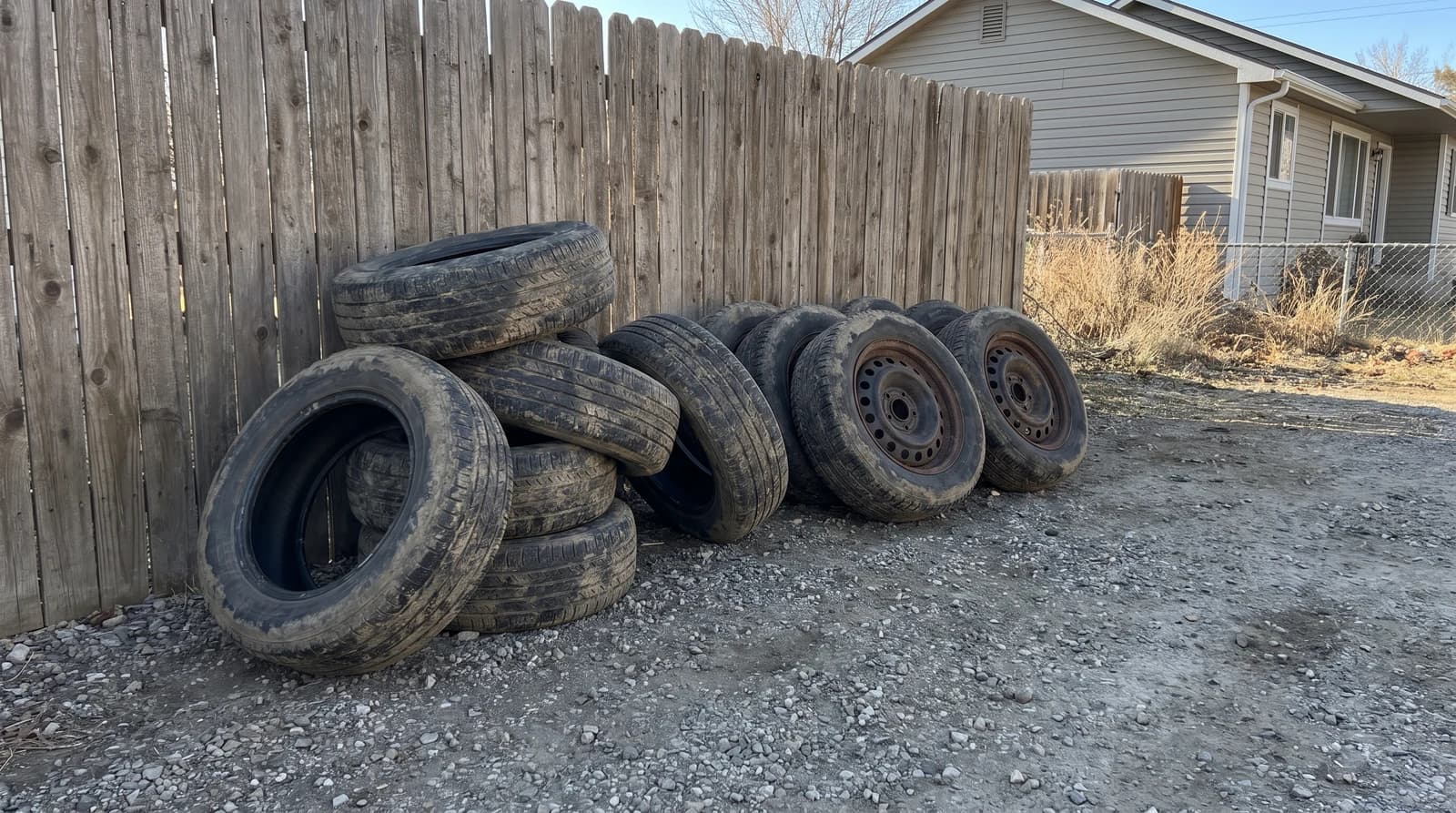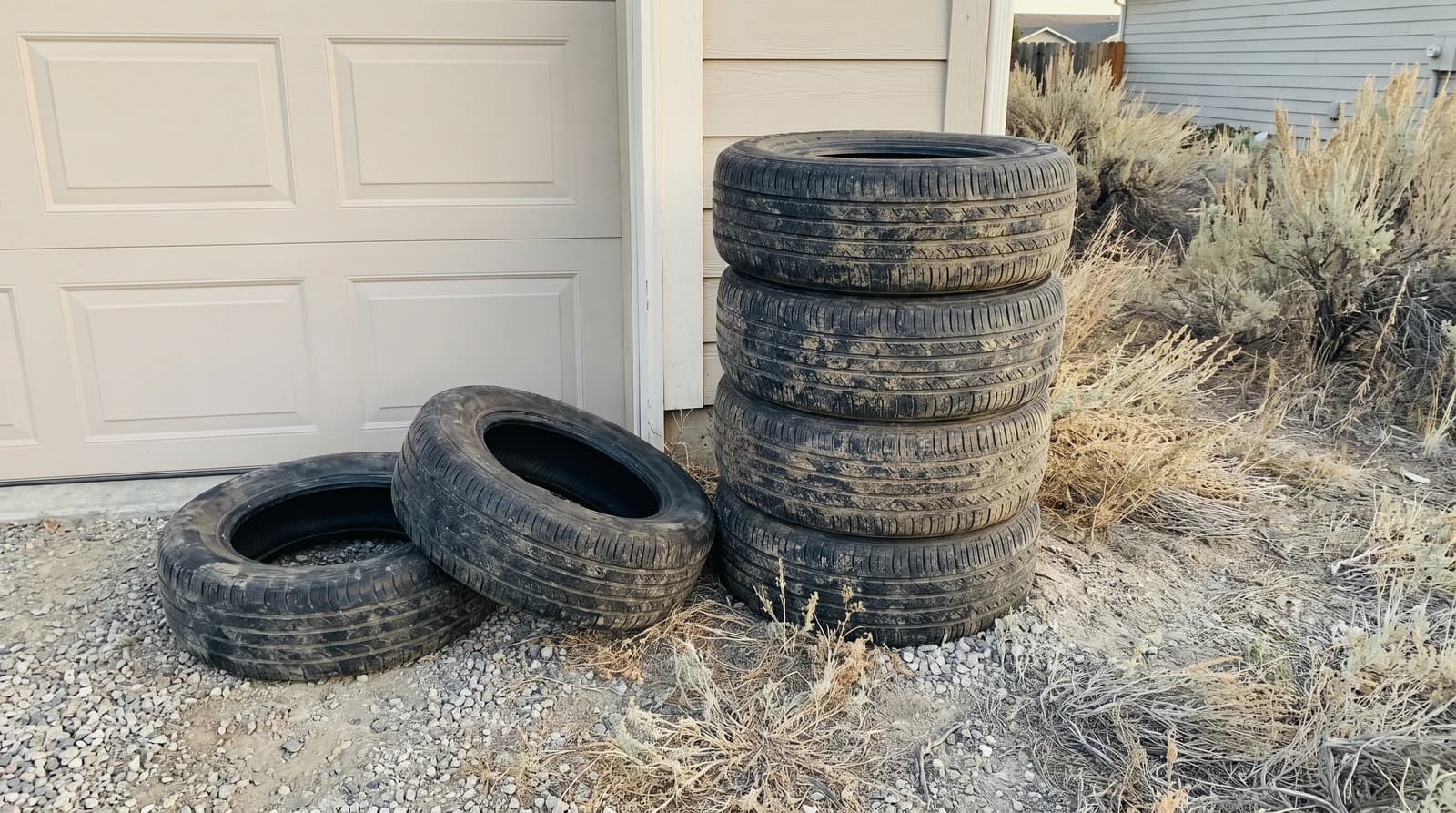

Tire Removal in Boise: Old Tire Planters and Buried Tires
Tire planters, tire retaining walls, or tires buried in the yard? Here's what tire removal in Boise really takes, what you can DIY, and when to call a crew.
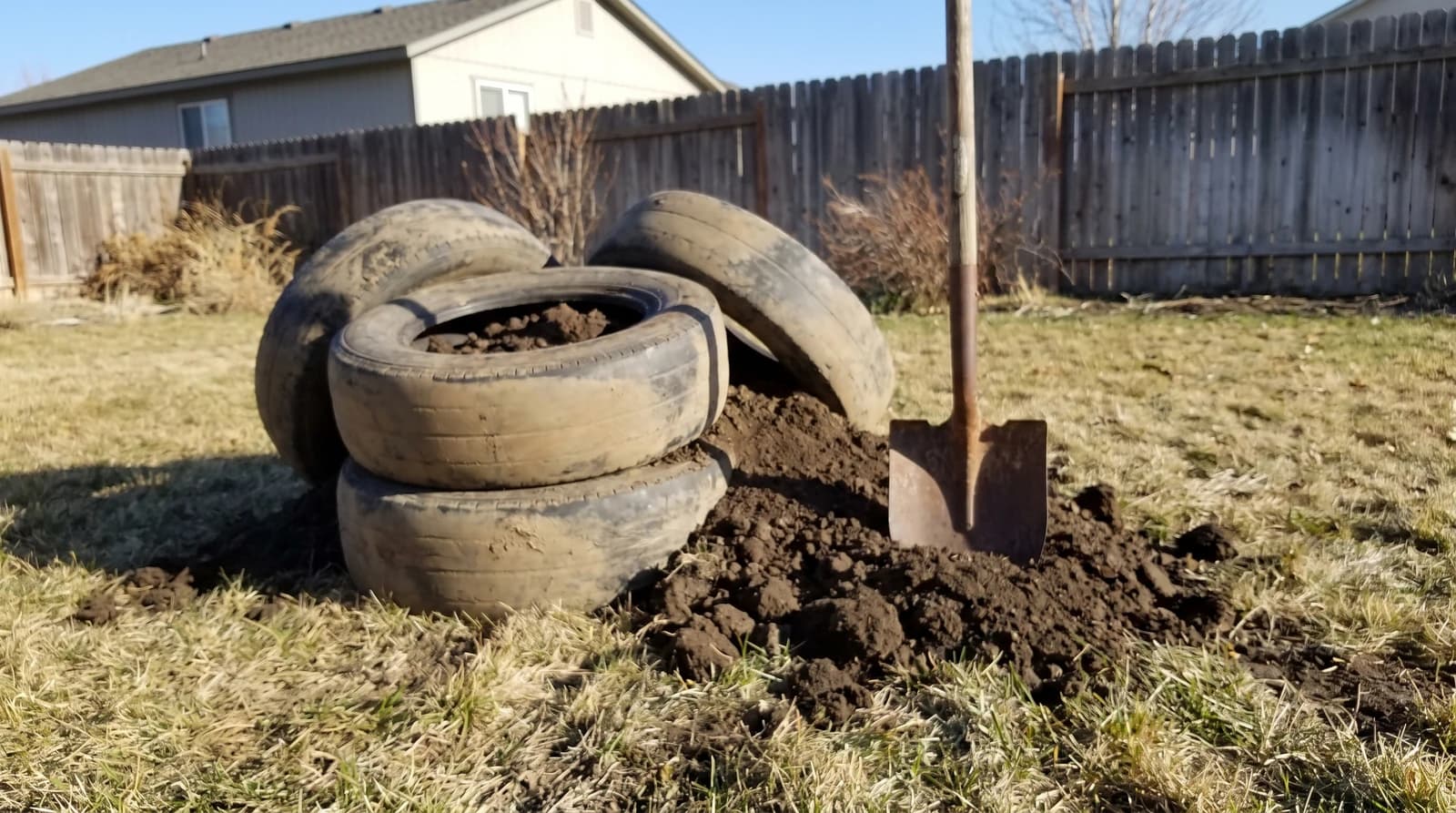
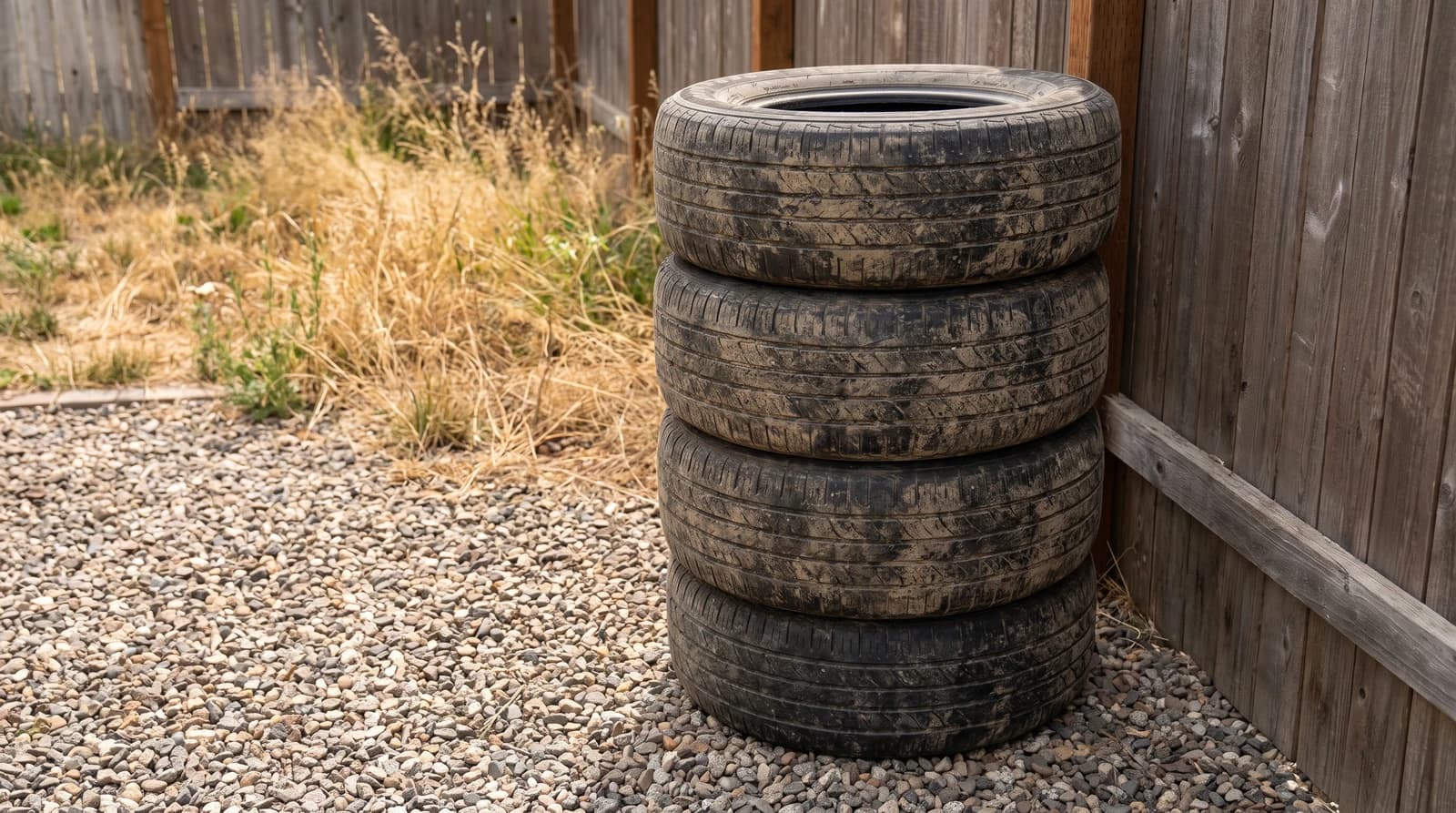
Three painted tires stacked in a sunny corner of the backyard, a few dead marigolds poking out the top. We see some version of that on tire removal jobs around Boise all the time. Years ago somebody decided it was a clever way to garden for free, and now it's the new owner's problem.
If you've bought an older house anywhere in the Treasure Valley, that new owner might be you.
These usually aren't a tidy stack of spare tires in the garage, either. They're packed with dirt, half sunk into the lawn, staked into a slope, or buried under a garden bed nobody's touched in 15 years.
Here's what getting them out actually takes, what you can do yourself, and when it's worth calling someone.
Why people pull out tire planters and tire walls
For a long time, old tires were the go-to material for DIY landscaping. They were free, they held dirt, and rubber doesn't rot.
That's the good part. The bad part shows up later, when the paint peels, weeds grow up through the middle, and the rubber cracks after enough hot Boise summers and freeze-thaw winters.
If you grow food, there's another question. Some gardeners worry that old rubber breaks down and leaches zinc and other compounds into the soil.
Is that a real problem? The research isn't settled. Plenty of folks with vegetable beds in Boise and Meridian would rather not find out, so the tires go.
Then there's selling the house. Tire planters don't look great in listing photos, and a stacked tire wall on a sloped lot up in the foothills tends to make buyers ask questions.
What slows this kind of tire removal down
A loose pile of tires goes fast. We toss them in the truck and we're gone.
Tires that have been part of the yard for years are a different story. Count the dirt packed into the sidewall and one old planter can push 100 pounds, so rolling it away isn't happening. The dirt has to come out first, because the landfill wants tires, not tires plus a wheelbarrow of topsoil.
Here's roughly how the time breaks down:
| What you've got | What it takes | Rough crew time |
|---|---|---|
| Loose tires on the ground or in the garage | Load and haul | A minute or two per tire |
| Tire planters sitting on top of the soil | Pull stakes, tip, dump the dirt, load | 5 to 10 minutes per tire |
| Tires half buried in a lawn or bed | Dig around, pry out, empty | 15 to 30 minutes per tire |
| Stacked tire retaining wall | Take down row by row, empty each one | Half a day or more |
That's why labor sets the price on these jobs. Getting rid of the tire itself is cheap. Digging it out is where the time goes.
If you want a feel for the base numbers, we broke them down in how much tire removal costs in Boise.
One more thing about tire walls. That wall is holding something back. Before you tear one out on a slope, figure out what's replacing it, whether that's a block wall, some boulders, or regrading.
Skip that step and your next project is scraping mud off the patio after the first big spring rain.
Buried tires on old Treasure Valley farm ground
This one catches people off guard.
A lot of newer neighborhoods in Meridian, Nampa, Kuna, and Star sit on old dairy and farm ground. Dairies used worn-out tires to hold down the tarps on silage piles, sometimes hundreds of them.
When the land changed hands, some of those tires got pushed into ditches or just covered over. So you start digging a garden bed or a sprinkler trench, hit rubber, and then hit another one.
Found one? Keep probing before you assume it's alone, because buried tires usually turn up in groups.
If you're on a few acres out toward Caldwell or Middleton, walk your fence lines and old ditch banks too. Tires love to hide in tall weeds and cattails.
And before you dig, call 811 to get the utility lines marked. It's free, and it beats finding a gas line while you're chasing a tire.
Tire removal you can handle yourself
Honestly, a handful of tire planters makes a fair weekend project. Yes, we'd happily take the job, but you don't need a crew for five tires and a shovel.
Once it's dry, a few things make the rest go smoother:
- Pull any rebar or wood stakes first. People drove them through the tread to keep planters from shifting.
- Dump the dirt right where the tire sits. It's your soil, so spread it back into the bed.
- Wear thick gloves. Old tires collect broken glass, nails, wasp nests, and the occasional black widow.
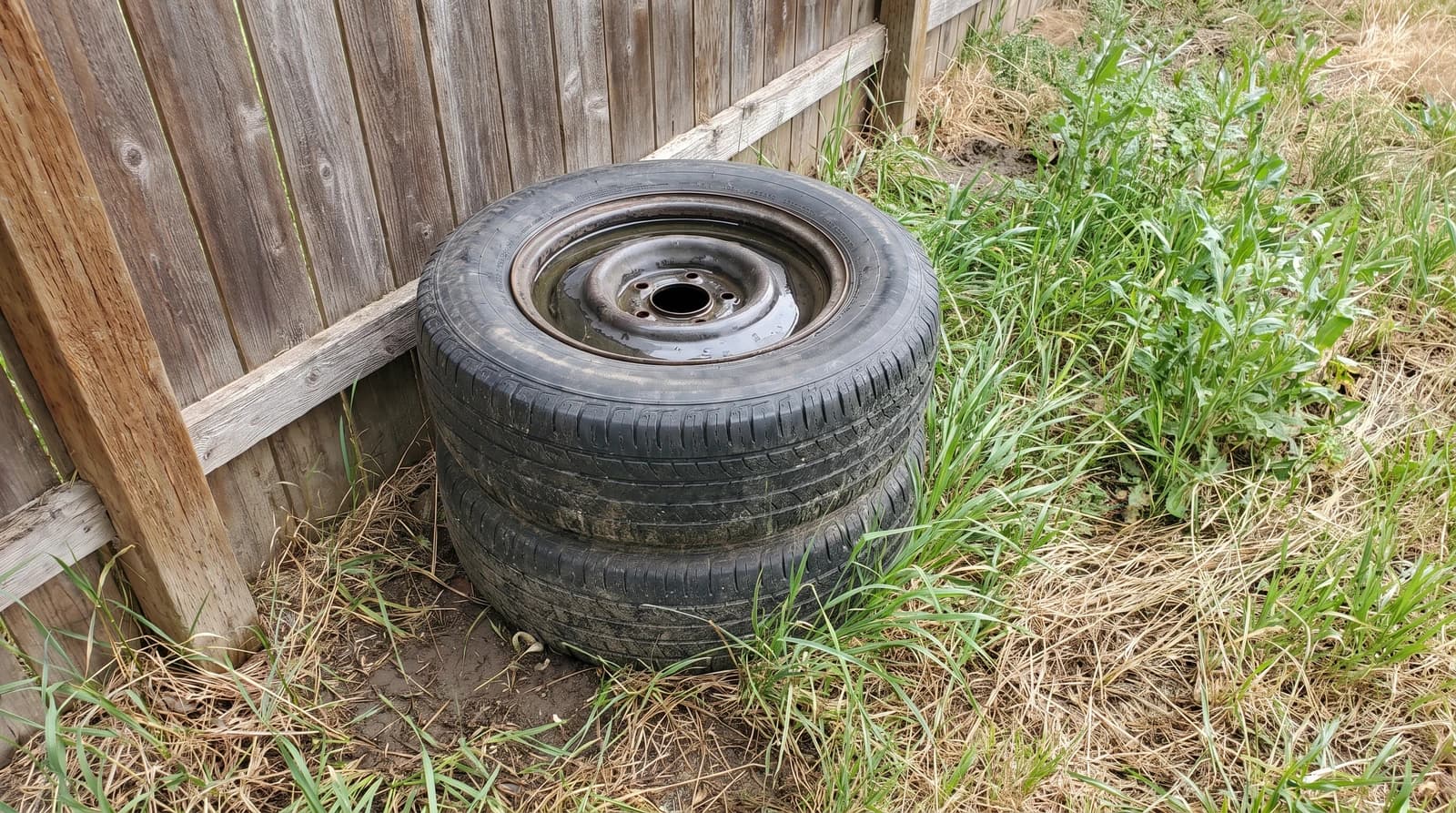
- Check for rims. Some older planters still have the wheel inside, and that changes where they can go.
That last one trips people up more than you'd think. Before you load anything, read up on whether the rims have to come off.
Once they're empty, they're just regular old tires. Ada County Landfill takes them for a few dollars apiece.
Don't put them in your trash cart, though. And don't bother dropping them at Idaho Youth Ranch or a thrift store, because they won't take them.
So when does it stop being a DIY job? Usually it's a full tire wall, a dozen or more buried tires, anything on a steep slope, or tires you just can't lift. At that point it makes sense to have a tire removal crew dig them out, empty them, and haul them off in one trip.
The bottom line
Tire planters and buried tires aren't complicated. They're just heavier and dirtier than anybody expects.
Get the dirt out and the stakes pulled, and you're back to ordinary tires.
If you've got more than you feel like digging up, you can see how our tire removal service works around Boise. Or just call us at (208) 593-2877 and tell us what you're looking at. We'll give you a straight answer on whether it's a Saturday project or worth handing off.
Need Help With Tire Removal?
Top Shelf serves Boise and the Treasure Valley with professional junk removal, cleanouts, and demolition services.