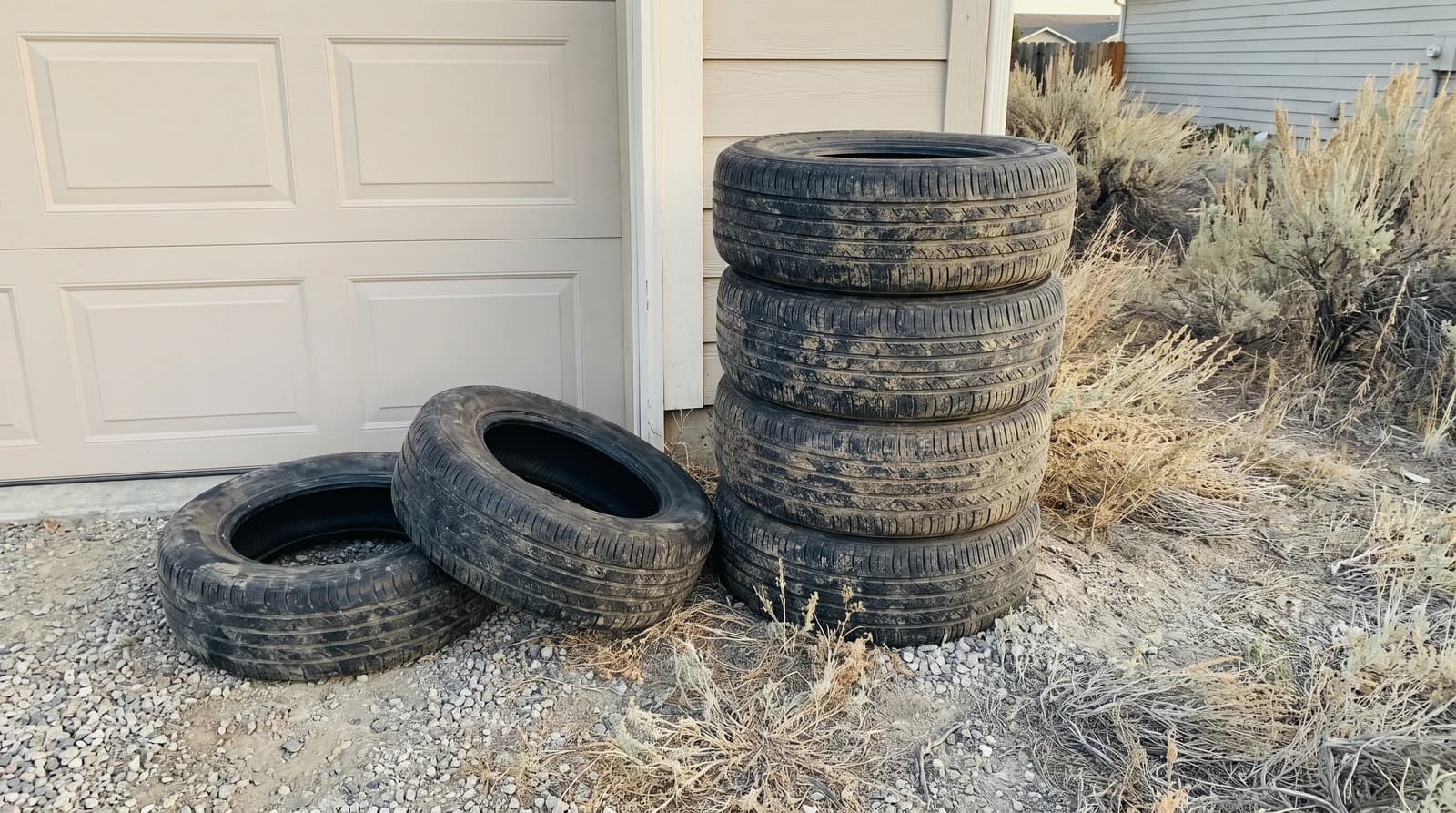

Tire Removal in Boise: Stop the Backyard Mosquito Problem
Old tires hold water and breed mosquitoes fast in Treasure Valley summers. Here's how tire removal works in Boise, what to do meanwhile, and real costs.
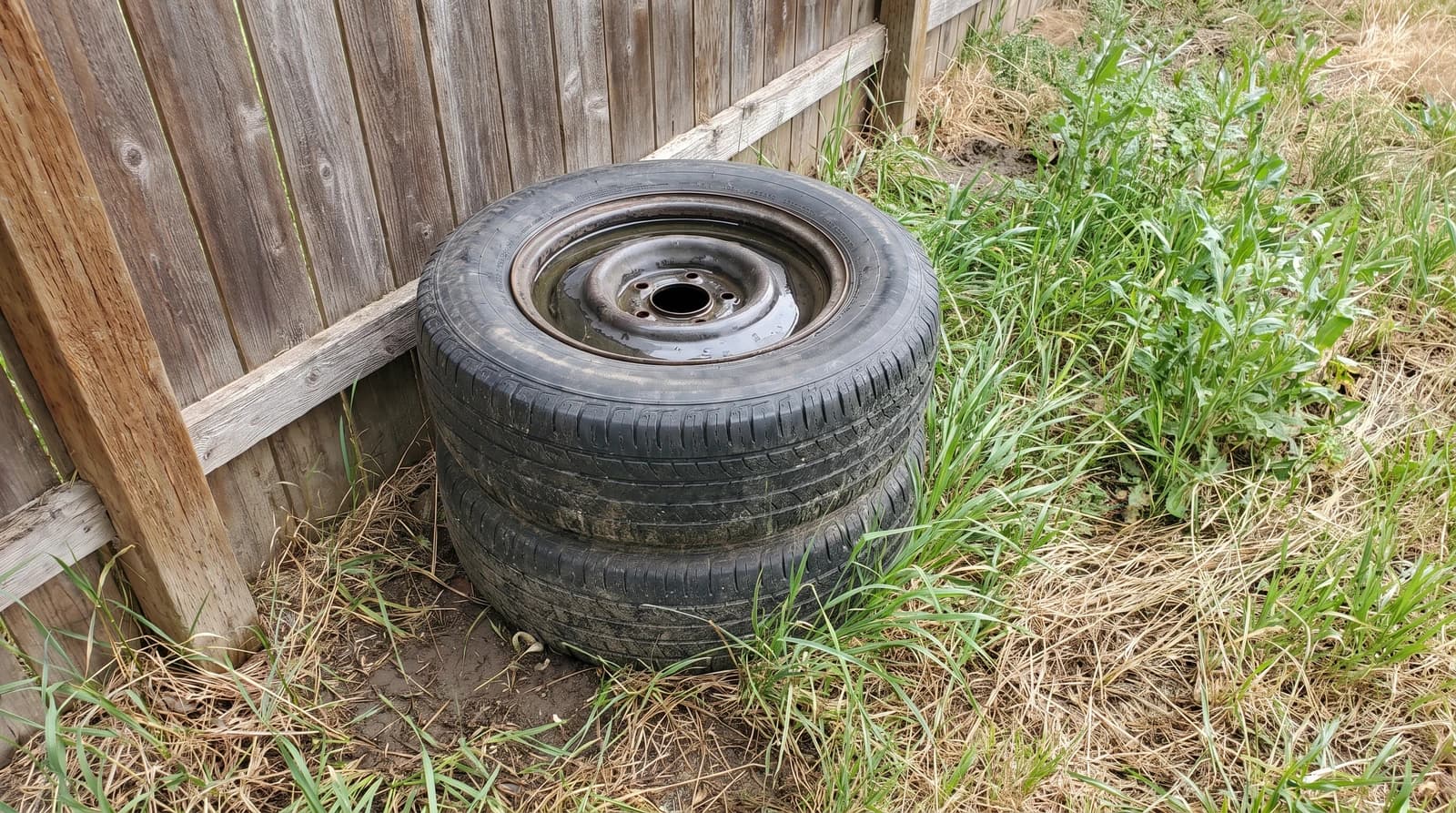
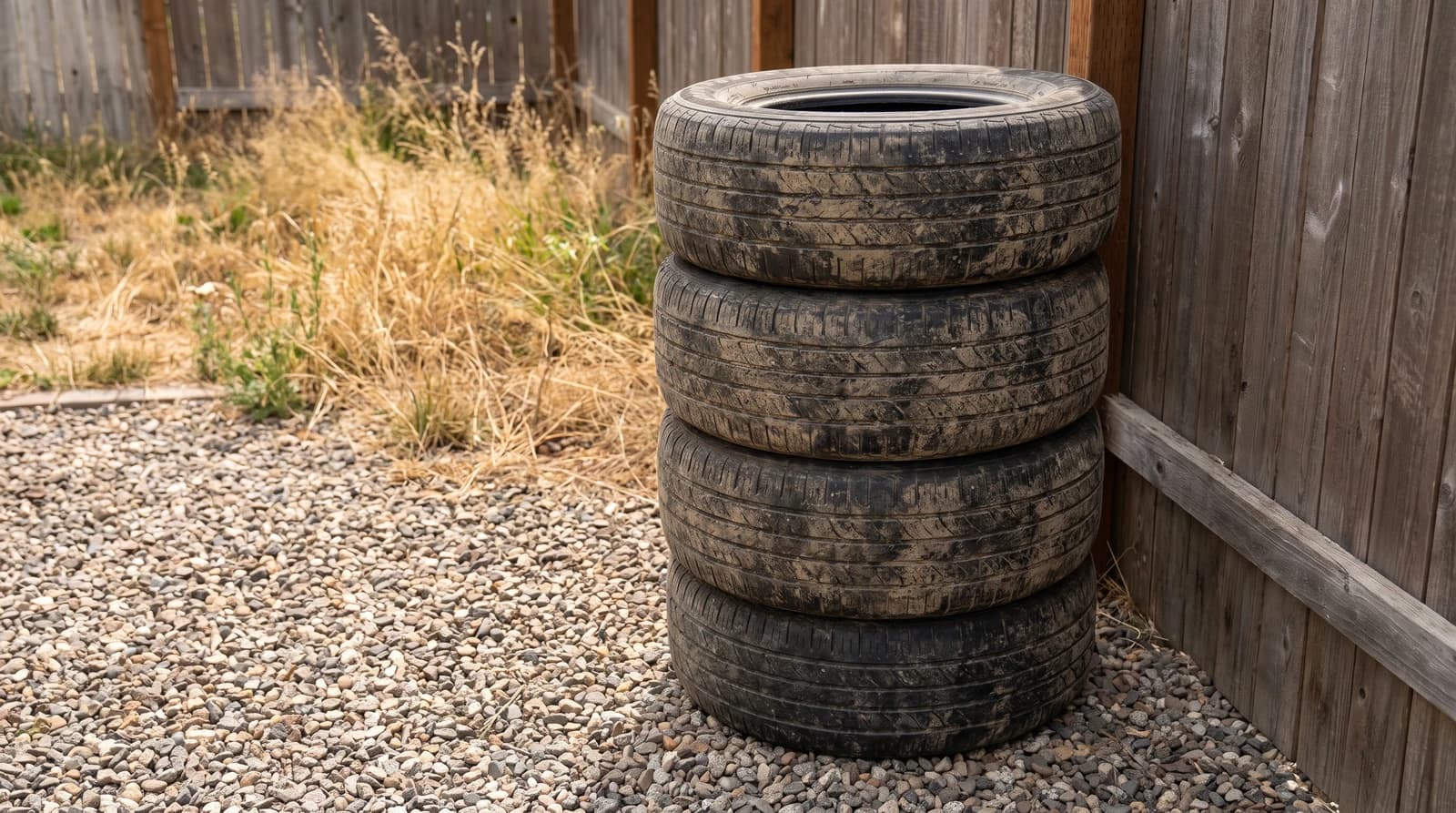
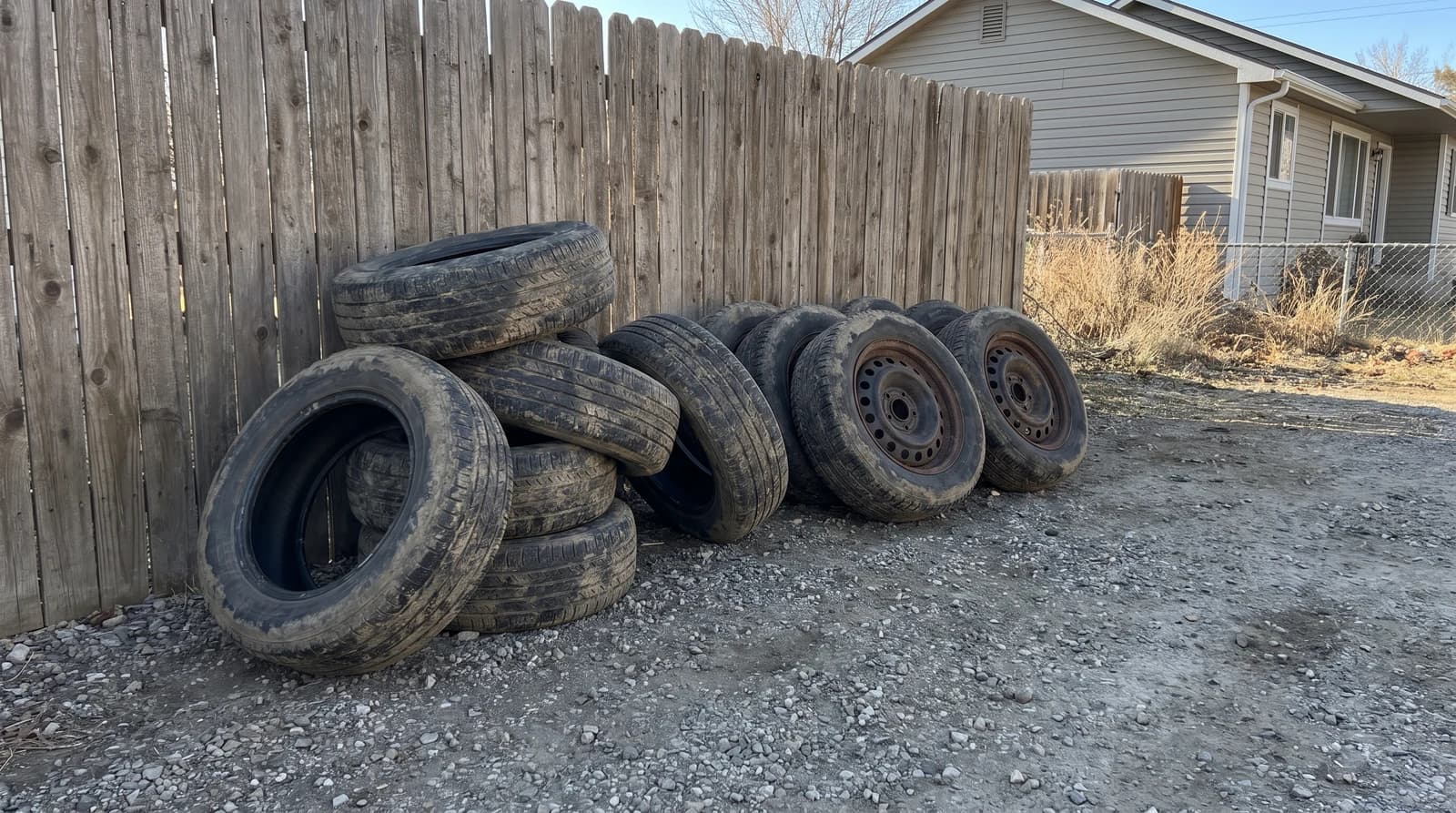
Pulled six tires out from behind a fence in Nampa a couple weeks back. The top one had about two inches of green water sitting in it, and when the homeowner leaned over for a look, he saw the wigglers. Most calls we get for tire removal in Boise start about like that, with somebody finally looking inside the pile.
Everybody already knows old tires are ugly and take up room. Fewer folks realize that one tire lying flat in the side yard is a better mosquito nursery than a pond.
And around here, July and August are when it catches up with you.
Why an old tire pile turns into a mosquito nursery
A tire is a rubber bowl with a lid on it. Rain gets in, sun can't dry it out, and the shade keeps that water sitting for weeks.
Add some grass clippings and leaf sludge and you've got the murky, still water mosquitoes are looking for.
Here's what surprises people: it doesn't take much water. Half an inch in a single tire can hatch hundreds of mosquitoes.
The Treasure Valley already has standing water in every direction once irrigation season kicks in. Both Ada and Canyon County run mosquito abatement programs for a reason, and West Nile shows up in trapped mosquitoes here most summers.
We're not trying to scare anybody. But when a customer tells us the tires "aren't hurting anything back there," that's usually not true by the middle of July.
Heat's the other problem. Rubber baking in 98-degree sun breaks down into the soil over time, and a stack of tires leaning against a wood fence is a real fire concern. Tire fires smoke for days and nobody enjoys putting them out.
What tire removal actually looks like when we show up
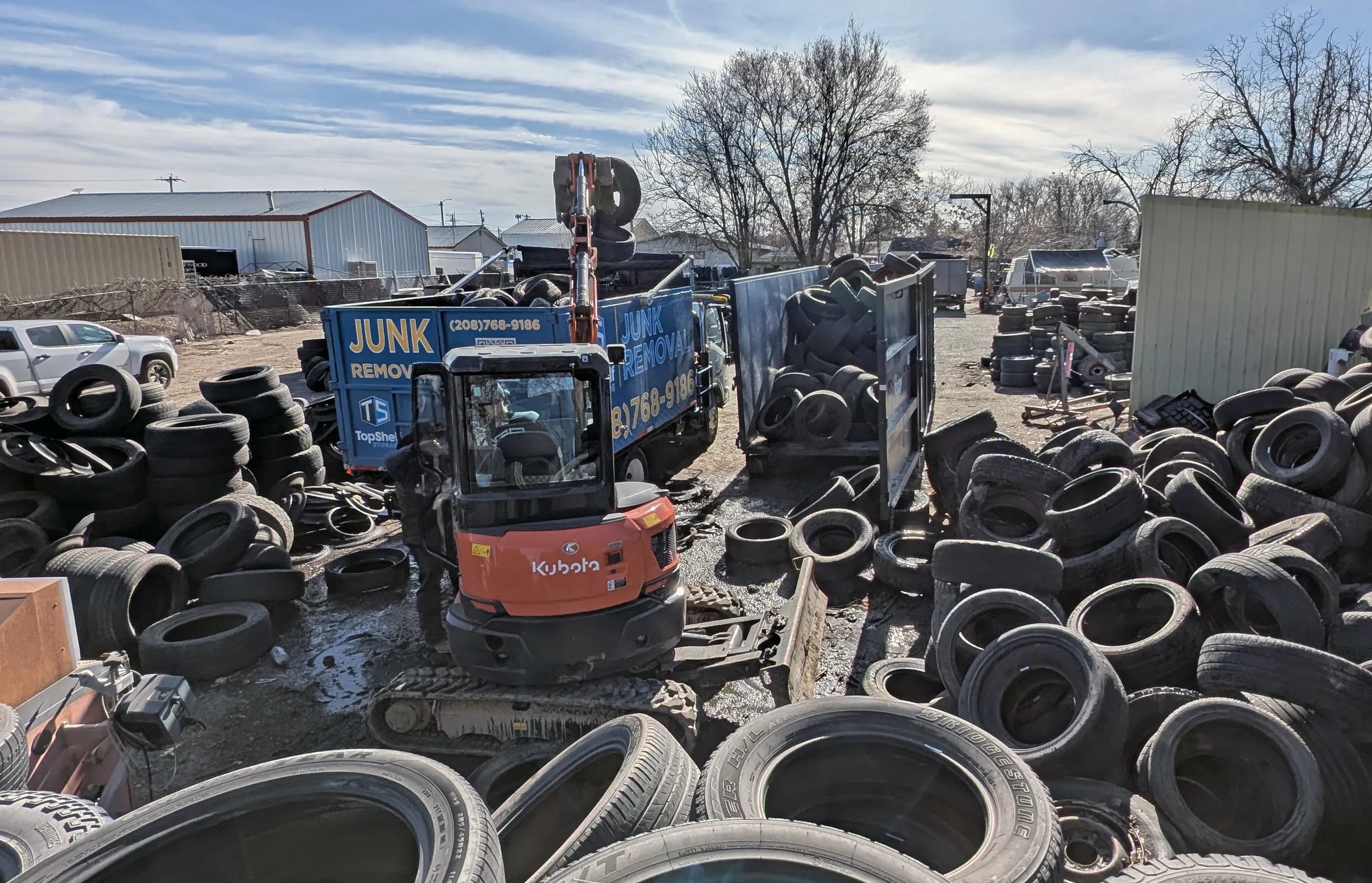
Honestly, this is one of the easier jobs we do. Most backyard tire removal jobs take fifteen or twenty minutes.
The crew rolls them out, dumps any standing water onto the grass away from the house, and loads them up. If they're still on rims we can take them either way, though rims shift the price a little, since the steel gets separated out and handled on its own.
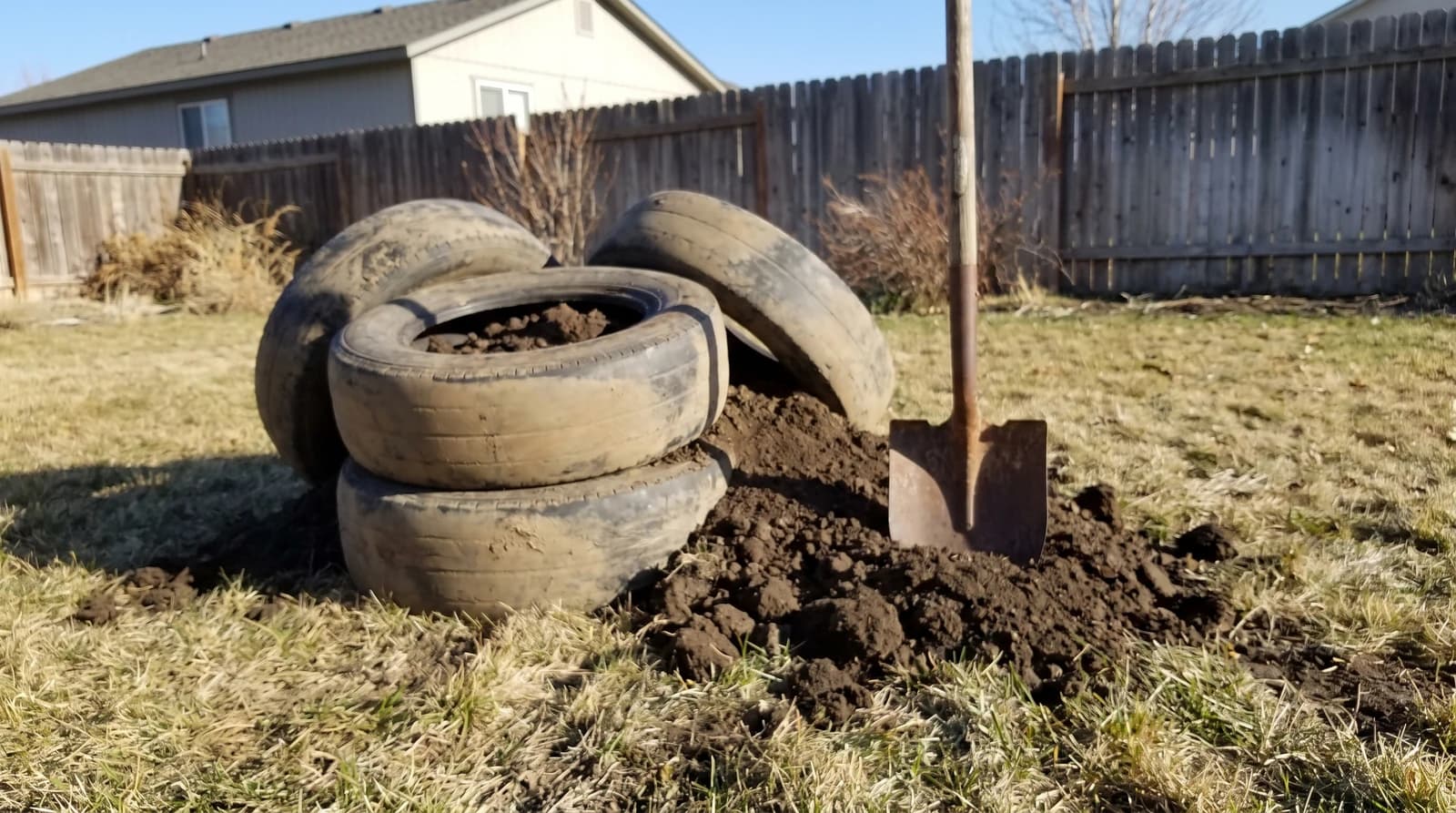
It slows down when tires have been sitting long enough to sink. Half-buried rubber with grass grown through the sidewall needs a shovel and some patience.
Same story with a pile that's been under a tarp since 2019 and turned into a rodent condo. We've opened up a few of those. Not our favorite mornings.
Got a real pile out on acreage in Kuna or Star? Give us a rough count when you call. Twelve tires and eighty tires are two different trucks.
How to get ready for tire removal day
You don't have to do much. A little prep makes tire removal faster and usually cheaper, because most of the price comes down to time and volume.
- ✓Drag the tires somewhere the truck can get within thirty or forty feet
- ✓Drain the standing water a day ahead so you're not sloshing it around during the load
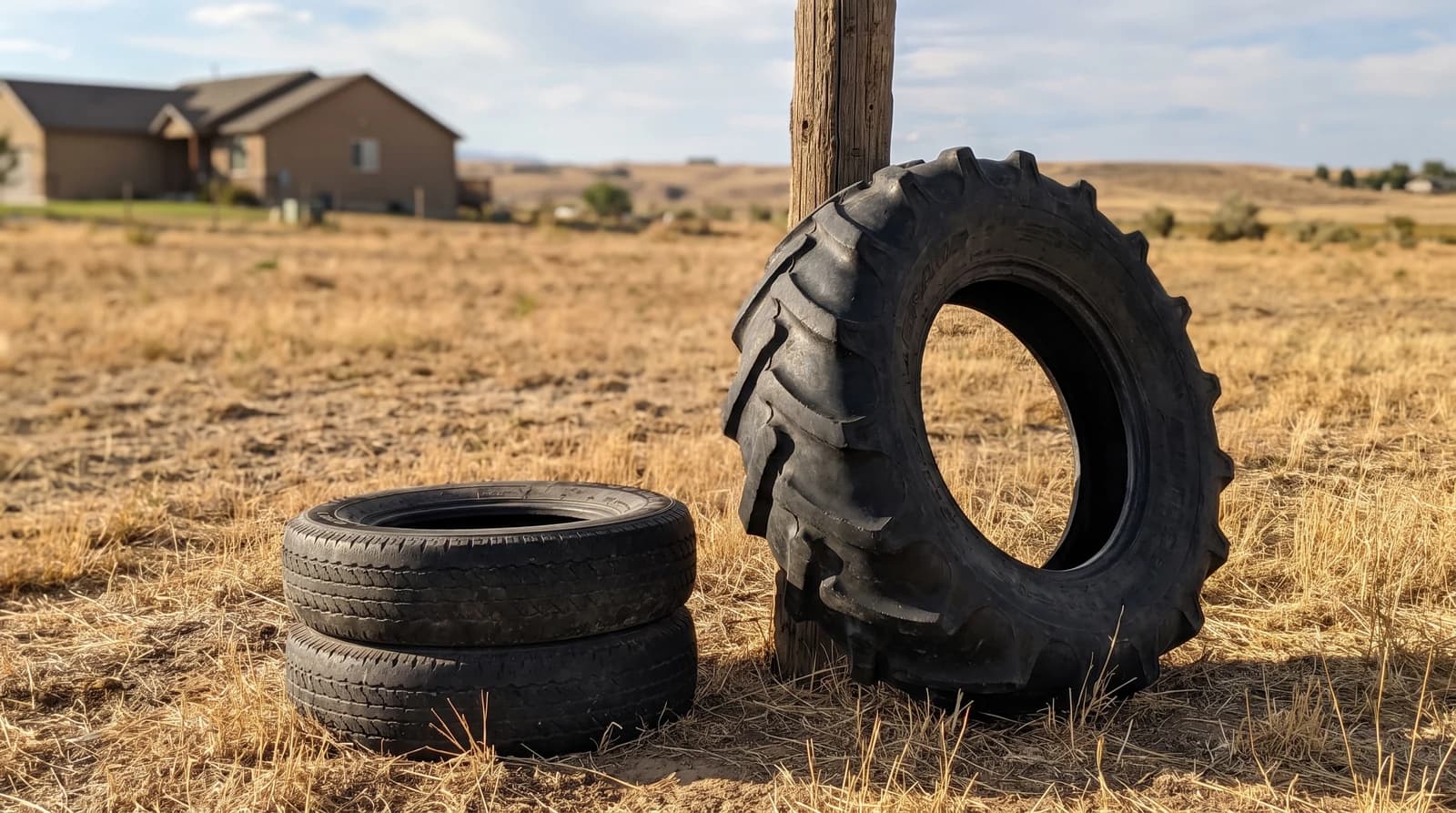
- ✓Split passenger tires from truck, tractor, or ATV tires if you can, since the sizes get charged differently
- ✓Tell us up front if any are still on rims
- ✓Move the mower, the hose reel, and whatever else is crowding the pile
If the tires are in a crawl space or behind a locked gate, just say so when you book. We'd rather know than find out.
Where your old tires actually end up
They don't get buried with the regular trash. Your curbside bin won't take them, and the local landfills and transfer stations charge per tire and keep them separate, which is exactly why they end up stacked behind so many sheds in the first place.
What actually happens is they go to a processor and get shredded. That material becomes crumb rubber for playground surfacing and athletic fields, fuel for cement kilns, or road base.
It's one of the better recycling stories in this business. Very little of a tire goes to waste.
Should you handle it yourself? If you've got three or four passenger tires and a pickup, probably. Some tire shops around Boise and Meridian will take a few for a small fee, and the Ada County landfill has a per-tire rate.
Yes, we'd love the job. But paying a company to drive across the valley for four passenger tires isn't a great use of your money.
Volume is where it flips. Once you're past ten or twelve, or they're heavy truck and tractor sizes, or they're buried and awkward to reach, the drop-off fees plus your whole Saturday start adding up.
Rough numbers: figure $5 to $15 per passenger tire depending on size and whether it's on a rim. That's roughly the same whether you haul them or we do. Tractor tires run higher.
One more thing worth mentioning. If you just bought a place and inherited somebody else's tire pile, it's yours now. We get those calls all spring, usually from people who never looked behind the shop building during the walkthrough.
Bottom line
Old tires aren't just clutter in a Treasure Valley summer. They hold water, they breed mosquitoes, and they don't go away on their own because you can't set them at the curb.
Flip them or drill them today. Then get them gone before the next rain fills them back up.
When you want them out of there, our tire removal service covers Boise, Meridian, Nampa, and the rest of the valley, and we usually have same-week openings. Call us at (208) 593-2877 with a rough count and we'll give you a number over the phone.
Need Help With Tire Removal?
Top Shelf serves Boise and the Treasure Valley with professional junk removal, cleanouts, and demolition services.