
Construction Cleanup Phases in Boise: Rough Clean to Final
Construction cleanup happens in waves, not one big pass at the end. Here's what rough clean, the heavy drywall pull, and final debris cost around Boise.
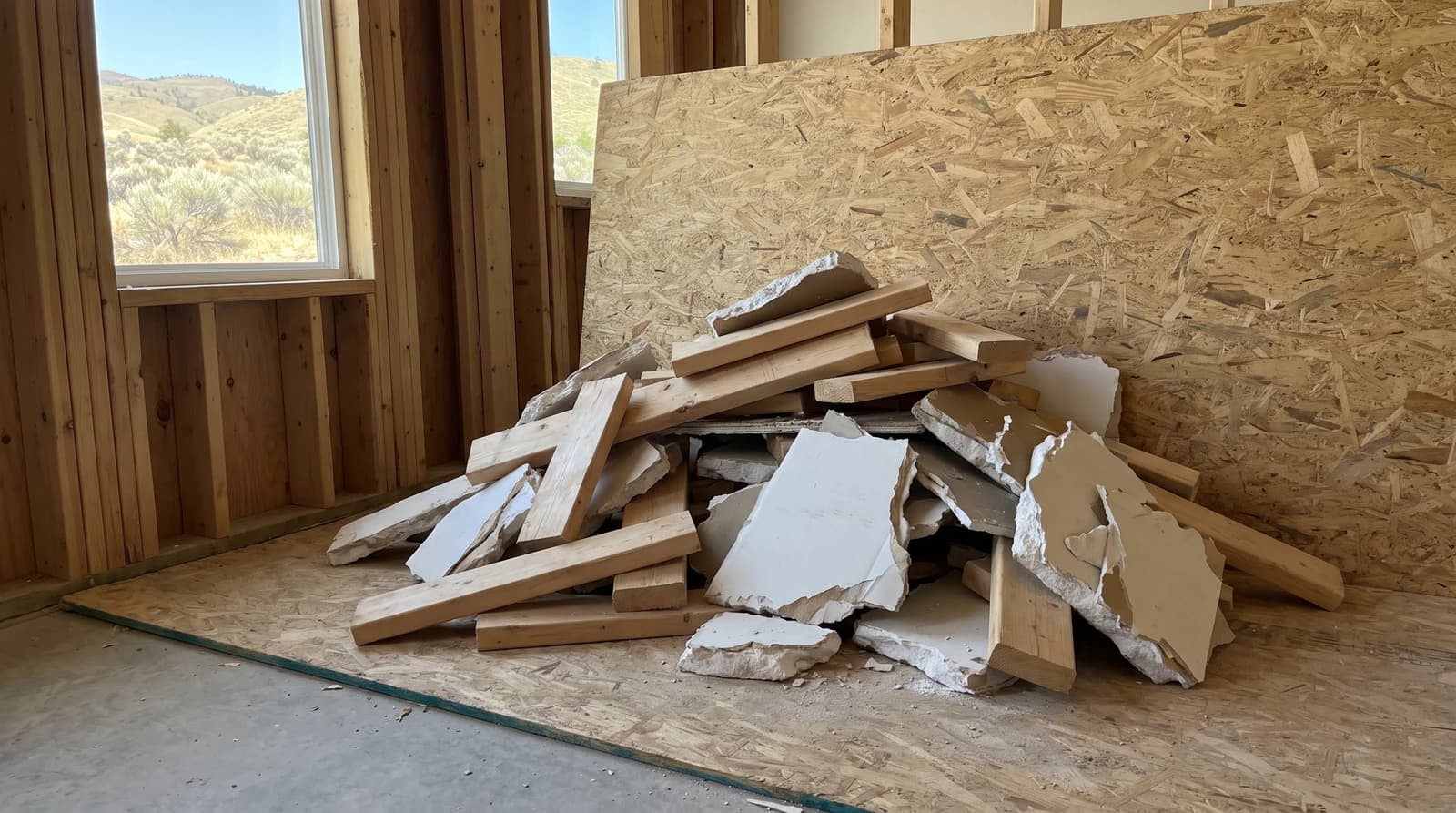
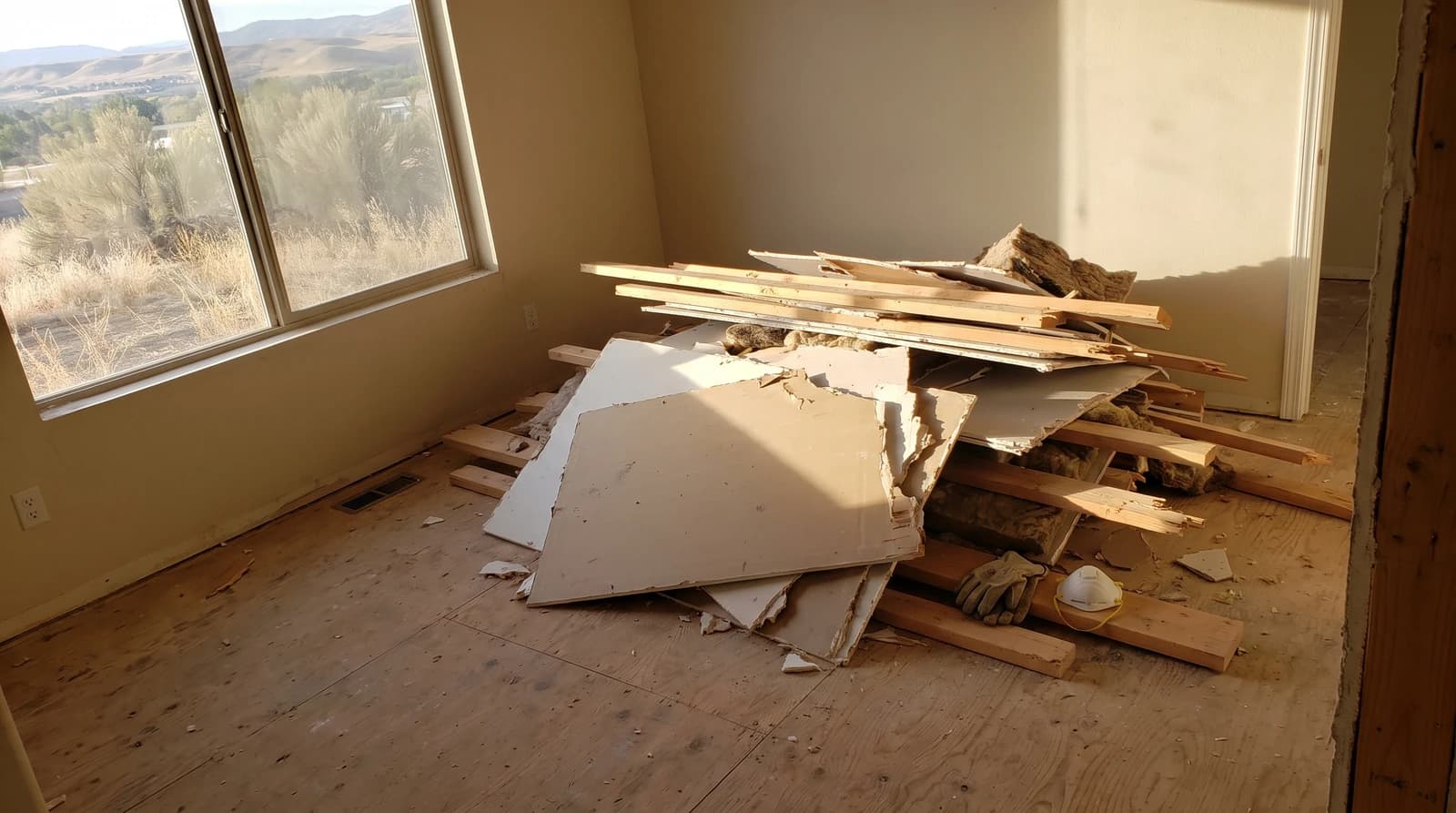
The drywall crew finished on a Thursday. Friday morning a homeowner in Eagle walked into her new bonus room and found four inches of scrap board, torn paper, bent screws, and three crusted mud buckets sitting exactly where the furniture was supposed to go.
Nobody had scheduled the construction cleanup. She figured the drywall guys hauled their own mess. They figured the contractor had it handled.
That gap is where most remodels go sideways. It isn't laziness. A build throws off junk in waves, and folks plan one big cleanout at the end when the job actually needs two or three passes.
Here's how those phases really shake out on Boise and Treasure Valley jobs.
What rough-clean construction cleanup covers
Rough clean happens after framing and rough-in plumbing and electrical, before insulation or drywall goes up.
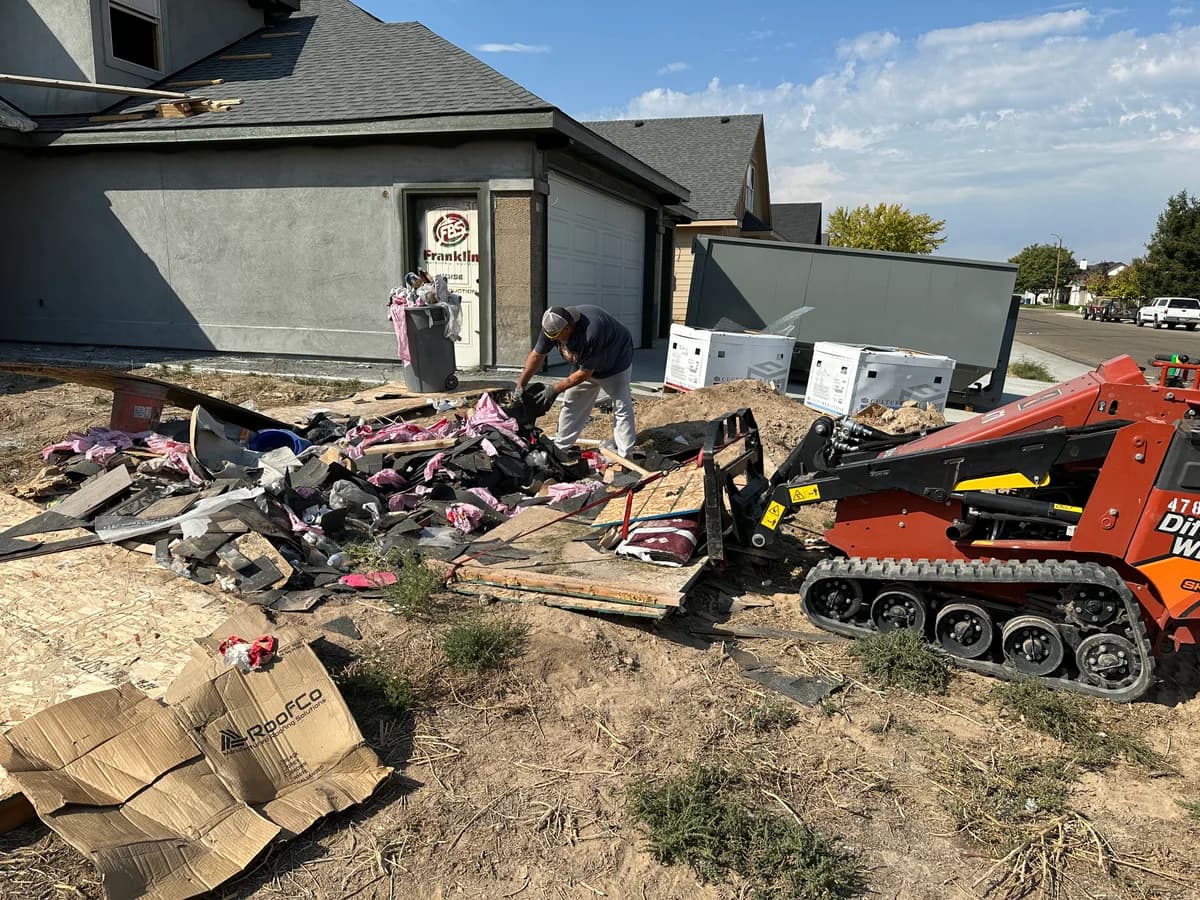
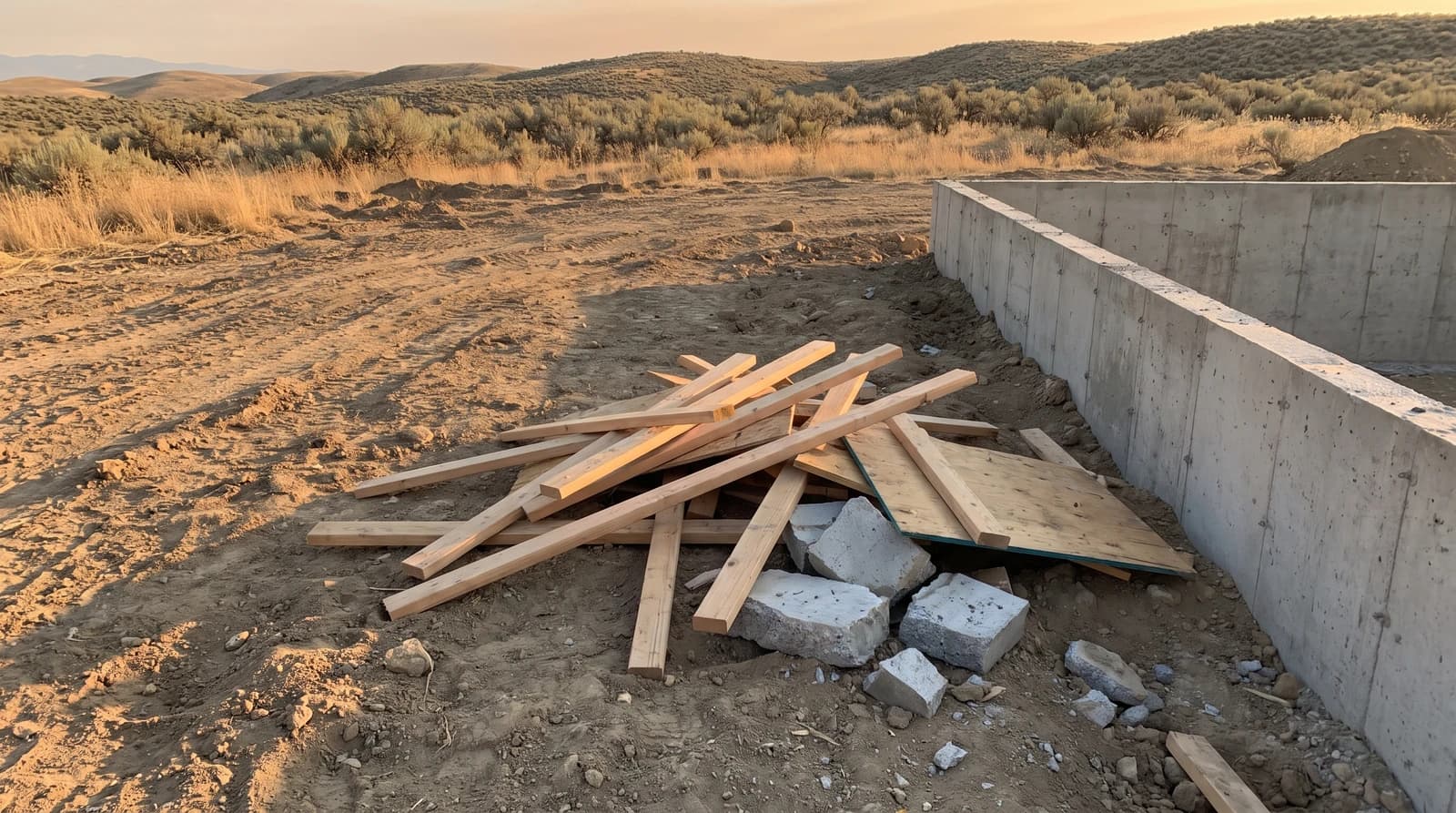
It's the cheapest, easiest pass on the whole project. It's also the one people skip. Lumber cutoffs, busted OSB, banding, cardboard from fixture boxes, and more plastic wrap than you'd ever guess. Light stuff, mostly. A quarter truck to a half truck on a typical room addition.
Why bother if it's going to get messy again anyway? Two reasons. Insulation and drywall crews move faster on a clear floor, and that scrap is the cheapest debris you'll ever pay to haul. Once drywall and tile enter the picture, you're paying by weight.
We pull metal at this stage and run it to Western Recycling instead of the landfill. Copper scraps, conduit, old ductwork. That's not us being noble. It keeps the tonnage down, which keeps your number down.
On a single-room job this pass takes us 30 to 45 minutes. It's rarely the expensive part.
The middle pass nobody schedules
After drywall and flooring, before paint and trim, the heaviest material on the entire job is sitting inside the house.
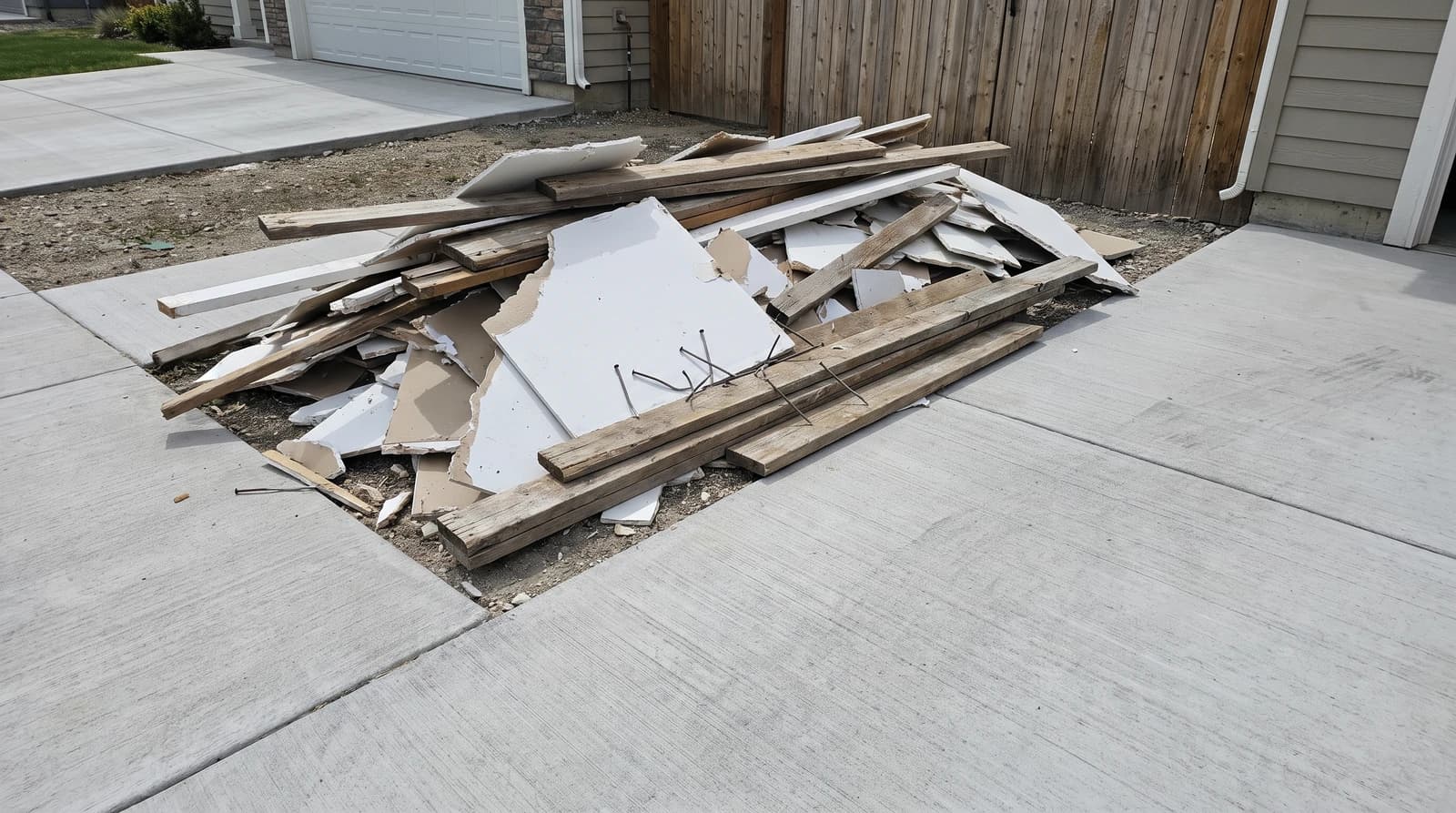
Drywall scrap is dense. Tile and thinset are worse. One bathroom demo plus a fresh tile install can put well over a thousand pounds in a truck without filling half the bed.
The landfill charges by the ton. So this pass costs more per square foot of debris than anything else on the project, and it's the one worth planning around.
This is also the pass where salvage matters. Leftover flooring boxes, an extra cabinet, a light fixture somebody changed their mind on. Idaho Youth Ranch takes a lot of that if it's still in decent shape, and it's worth ten minutes to set it aside before it gets buried under gypsum dust.
Where the debris pull ends and the detail clean begins
People use "final clean" to mean two pretty different jobs. That causes a lot of confused phone calls.
| Phase | Timing | What comes out |
|---|---|---|
| Rough clean | After framing and rough-in | Lumber cutoffs, cardboard, wrap, scrap metal |
| Heavy pass | After drywall and flooring | Drywall, tile, thinset, underlayment, buckets |
| Final debris pull | Before punch list | Trim cutoffs, packaging, leftover material, floor protection |
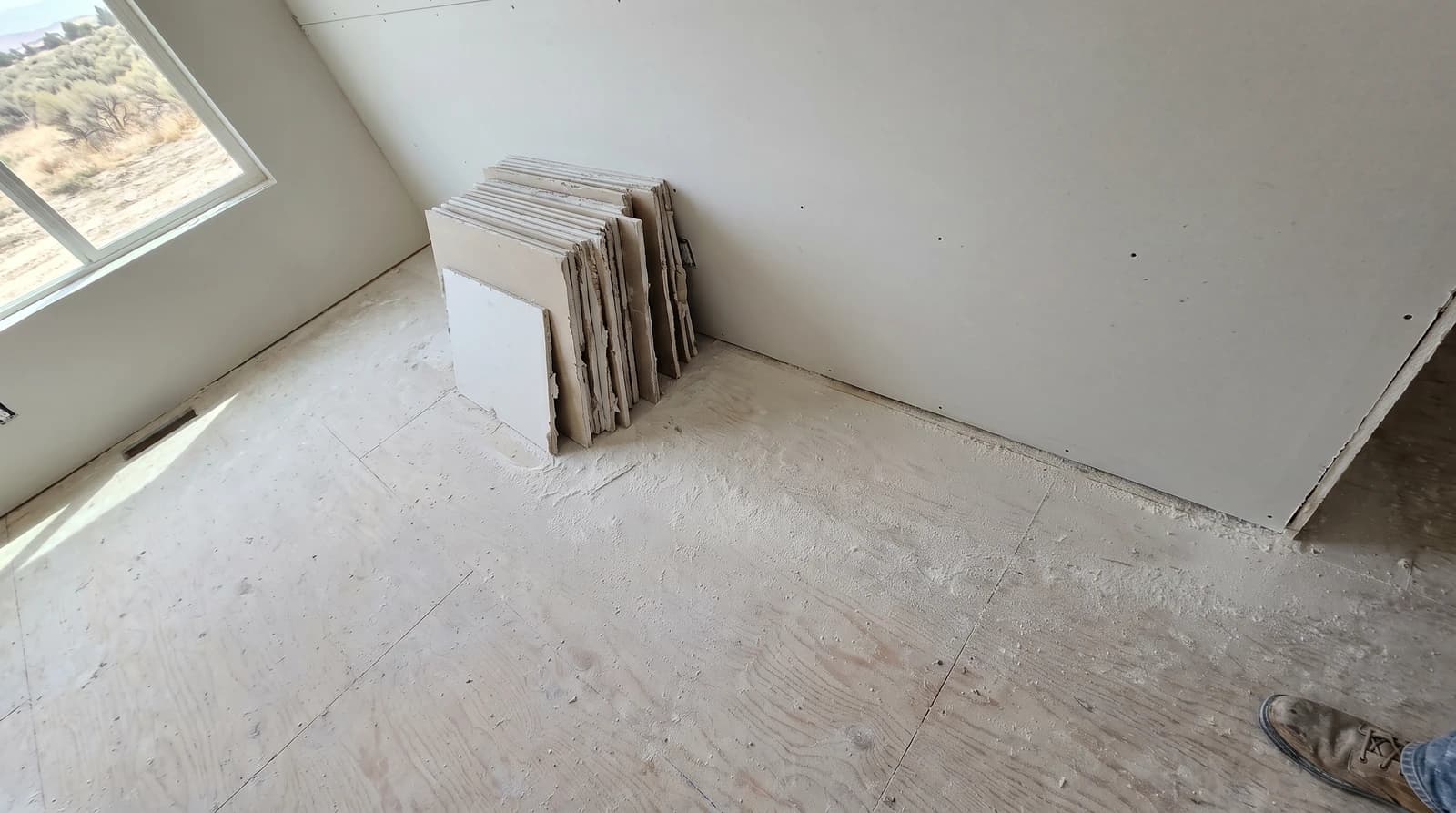
| Detail clean | Dead last | Dust wipe-down, windows, floors, fixtures |
The first three are what our construction cleanup crews handle. The last one belongs to a cleaning company with vacuums and microfiber, and you genuinely want a real cleaning crew for it. We'll get every scrap out of the house. We're not the ones getting drywall dust off the top of your window casings.
Still sorting out who owns which piece of the mess on your job? We broke that down further in Who Handles Construction Cleanup in Boise?
What construction cleanup costs around Boise
It's priced by how much room the debris takes up in the truck, with weight limits sitting behind that.
- Quarter truck, rough clean on a small remodel: roughly $200 to $300
- Half truck, a typical drywall pass: $350 to $475
- Full truck, whole-house remodel debris: $600 to $850
Heavy material moves those numbers. A full truck of lumber and cardboard prices out differently than a full truck of tile, because one of them is going across the scale at the Ada County landfill and the other barely registers.
Three smaller pulls will usually run more in total than one haul at the end. They also keep your subs moving and keep you from renting a container that sits in the driveway for six weeks.
If your project runs longer than a month with debris coming out steadily the whole time, a roll-off probably pencils out better. We compared the two honestly over here: Dumpster Rental vs. Construction Cleanup in Boise
Yes, we'd love all three hauls. But if you've got a two-month build in Meridian or Nampa with a steady trickle of scrap, rent the container and call us for the heavy pass only. You'll spend less, and we'd rather say that now than after the invoice.
One more thing worth knowing. Most of our construction pulls get scheduled the same week, sometimes next day. Booking a couple days ahead of your drywall finish is usually plenty.
Bottom line
Debris comes in waves, so plan the cleanup in waves. One pass after rough-in, one after the heavy trades, one before punch list, then a cleaning crew for the dust.
Budget for all four and you won't get blindsided on a Friday morning.
Want a hand with any of those passes? Give us a call or text at (208) 593-2877 and tell us what stage the job's at. We'll give you a number before anybody shows up.
Need Help With Construction Cleanup?
Top Shelf serves Boise and the Treasure Valley with professional junk removal, cleanouts, and demolition services.