
Cleaning Mouse Droppings in Attic Spaces: What's Safe and What Has to Go
By Eric Hinderager, owner of Top Shelf Junk Removal and Demolition · Updated
Cleaning mouse droppings in attic spaces safely: how to soak and bag the mess, when insulation has to go, and what moves the cost of a rodent cleanup.
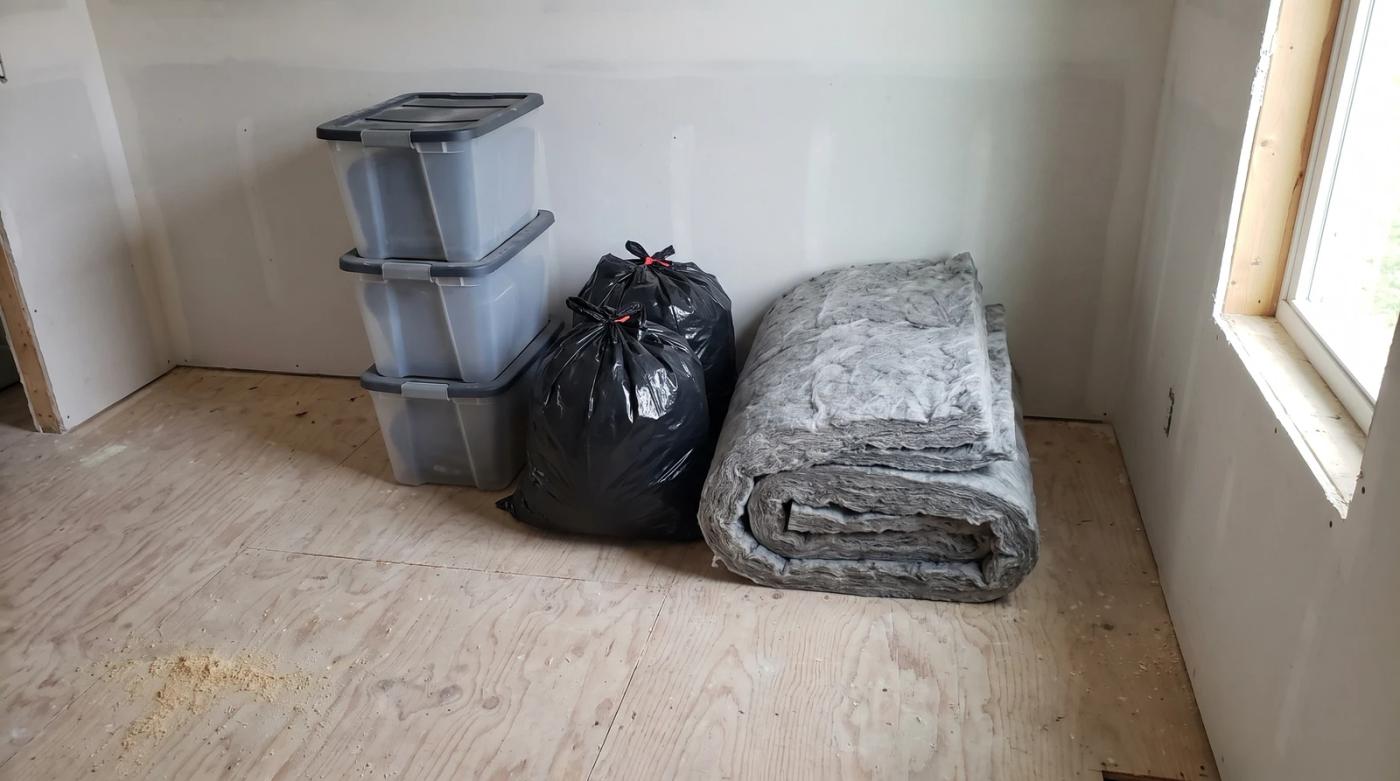
Cleaning mouse droppings in attic spaces comes down to three things: wet everything before you touch it, bag what can't be cleaned, and seal the entry points so the rodents don't come back.
It's fixable, and a lot of it doesn't need professional services at all. It does change an attic cleanout, though, and it adds to the work.
Signs of a mouse infestation and where the entry points are
Rodents don't need much of a gap to get into an attic. A pencil-width opening at the soffit will do it. So will a loose screen on a gable vent, or a hole where a cable line was drilled and never sealed.
Older homes on the Bench and in the North End tend to have more ways in. Decades of settling opens things up. Newer attics in Meridian and Nampa get rodent problems too, so newer isn't the same as sealed.
A few signs something is living in your attic:
- Droppings clustered along the tops of joists and in corners, not spread evenly
- Attic insulation tunneled through or shoved into piles
- Shredded cardboard, paper or fiberglass wadded into a nest
- A sharp ammonia smell from rodent urine in the closet or hallway below
- Scratching overhead after dark, which is when they are active
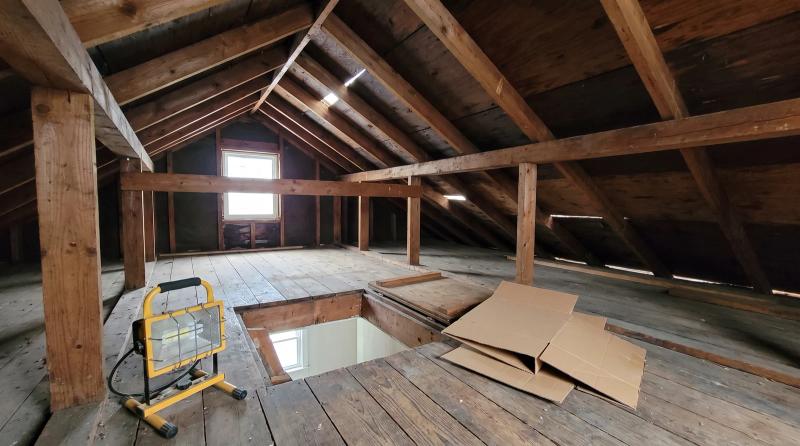
See more than one of those and it's likely a mouse infestation, not a lone visitor. Rodents leave urine and feces along every path they travel, so the mess is usually wider than the first pile you spot. Check the whole attic, not just the corner by the hatch.
Is it dangerous to clean up mouse droppings?
It can be if you clean them up dry. Sweeping or vacuuming kicks dust from the droppings into the air. That's the part you don't want in your lungs.
Deer mice in the West can carry hantavirus. It's rare, but it's the reason handling rodent droppings the right way matters. Droppings can carry salmonella too.
Urine is the sneakier problem. It soaks into fiberglass batts and blown-in cellulose insulation, and it doesn't just dry out. It drags down the air quality in the rooms below.
In a damp corner, soaked rodent nesting material and insulation can hold moisture against the wood. Give it long enough and mold can start.
If anyone in the house has asthma or a weak immune system, that's a good reason to have someone else handle it.
Heads up: Don't sweep, and keep the shop vac out of it. Mist the droppings with a bleach solution, one part bleach to ten parts water, or an EPA-registered disinfectant. Let it sit five minutes, then wipe it up with paper towels. Wet cleaning helps keep the dust out of the air.
Cleaning mouse droppings in attic spaces, step by step
Doing the cleaning yourself? Gather this before you climb up:
- An N95 respirator to filter the air you breathe, not a cloth mask or a bandana
- Rubber, nitrile or plastic gloves you can throw away after
- A spray bottle with your disinfectant mix
- Contractor bags, doubled up
- Long sleeves and pants you won't miss
Then work through it in order:
- Open the attic hatch. Let fresh air move through for half an hour before you start.
- Spray every pile of droppings, every rodent nest and any urine stains until they're soaked. Then wait.
- Pick up the wet mess with paper towels and bag it as you go. Don't drag loose material across the joists.
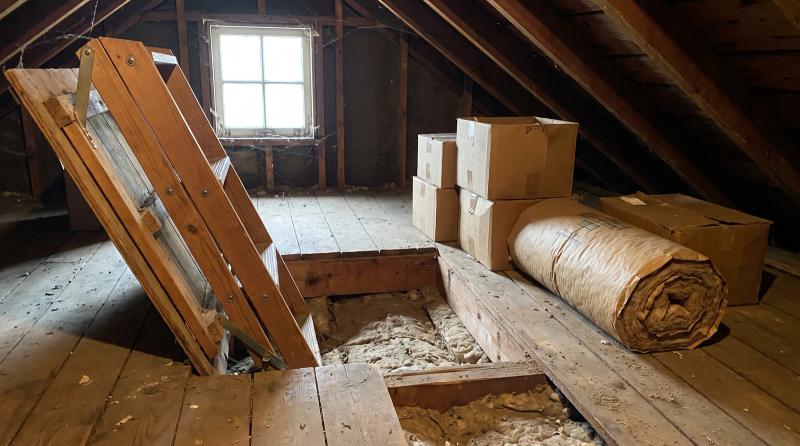
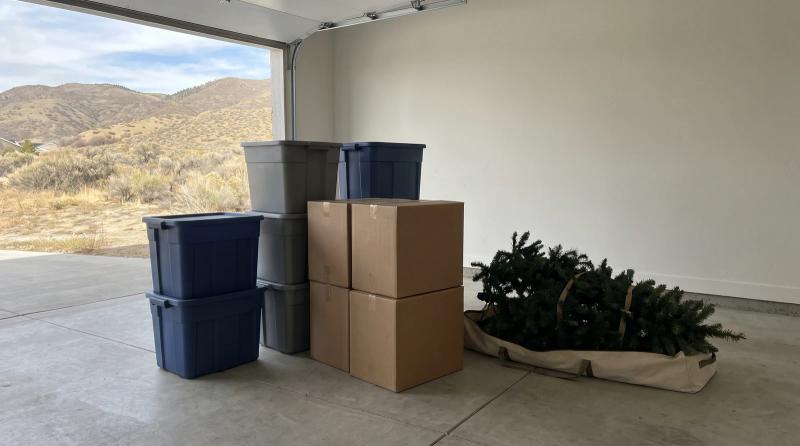
- Sort the stored stuff. Chewed cardboard boxes go. Sealed plastic totes usually wipe clean with the same spray.
- Check the insulation. Contaminated insulation usually needs removal, because you can't wash it clean.
- Wipe down the hatch frame, the ladder and your tools with the same spray.
- Spray your gloves before removing gloves, bag them, then wash hands with soap and water.
Fabric is what people want to save. Old mattresses, padded chairs and boxes of clothes are hard to clean right, so replacing them is often simpler.
Quick tip: Watch where you step. Attic drywall won't hold a person. Stay on the joists or lay down a board to kneel on.
A few mistakes that make it worse:
- Pointing a fan at the mess, which blows dust all over the attic
- Working in short sleeves and carrying the dust downstairs on your clothes
- Walking back through the house in the same shoes
- Tossing bags in an open bin instead of tying them shut first
- Setting traps and skipping the sealing, so new ones move into the same space
For a small job, disposal is simple. Tie each bag shut and put it in a trash can with a lid that closes. If you end up with a big pile, check with your city's trash service before you set it out.
Found droppings on a carpet or rug below the hatch? Same rule: soak them, wait, then blot them up with paper towels instead of vacuuming. A badly stained rug may need shampooing or replacing.
Then seal the entry points, either before the cleaning or right after it. Skip that and you'll be back up there doing this again. We're a junk removal and demolition crew, not a pest control company, so the honest advice is to have a wildlife or pest pro find the holes.
Once the cleaning is done, look the attic over again after a while. Fresh droppings mean they're still getting in somewhere.
What does a rodent attic cleanup cost?
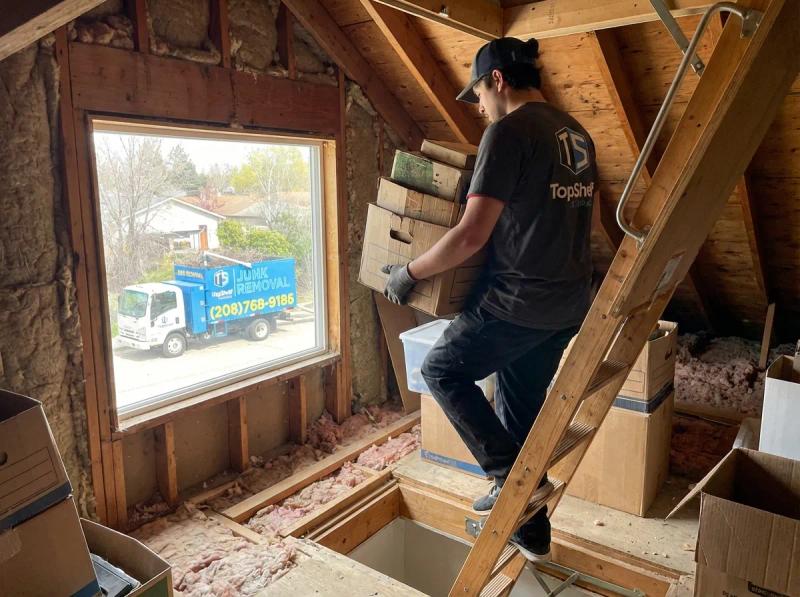
A regular attic cleanup in the Treasure Valley is just boxes and old junk. It's priced by volume, meaning how much truck space it takes up. Add rodent damage to the insulation, and it turns into a different job.
Here's what moves the cost up or down:
- How big the attic is and how deep the insulation sits
- How tight the space is and how easy the hatch is to reach
- How much of the insulation is soaked with urine and has to come out
- How much stored stuff gets hauled along with it
- Whether new insulation goes in after the removal, which is its own job
Why does rodent damage slow the cleaning down? It's hot, cramped work with respirators on and not much air moving. Contaminated material goes to the landfill. It can't be donated or recycled.
Season matters a little, too. Valley attics get very hot in summer, so a lot of people plan this work for a cool morning or a cooler time of year.
Here's a rough way to size up what you found:
| What you found | What usually makes sense |
|---|---|
| One corner of droppings and a few dry boxes | A DIY clean with a mask, gloves and bags |
| Droppings across the attic, but the insulation is dry | Wet cleaning, then a close look at the insulation |
| Soaked insulation and a smell downstairs | Full removal, sealing, then new insulation |
Some homeowners hire separate services for each part. One crew hauls things out. A pest company handles the sealing, and an insulation company puts in the new layer.
Attic cleanouts are one of the services we offer around Boise, Meridian, Nampa and the rest of the valley. Our removal services cover the junk and the chewed boxes. If rodent-damaged insulation needs to come out too, bring it up when we look at the attic.
Worth asking: Before you book anyone, know roughly how much of the space is affected, whether the smell reaches the rooms below, and what's stored up there. Photos of the hatch and the worst corner tell a crew a lot.
If you're up there now trying to figure out how bad it is, give us a call at (208) 593-2877. We'll tell you honestly whether it's a DIY job or worth handing off for removal services, and the on-site estimate is free.
Frequently asked questions
Is it okay to leave mouse droppings in the attic?
It's not a good idea. Old droppings break down into dust that gets into the air, and leftover droppings make it hard to tell if the rodents are still around. The droppings need to be cleaned up and the insulation under them checked.
How long do rodent droppings stay a problem?
You can't tell by looking whether old droppings are harmless, so handle old and new droppings the same way. Soak them, wait, then wipe and bag them so they can be removed safely.
Does rodent urine come out of insulation?
Not really. Rodent urine soaks into insulation fibers and keeps smelling, so the usual fix is replacing those sections instead of trying to clean them. It's one of the main reasons an attic cleaning turns into insulation removal.
Do disinfectant wipes work on this mess?
The Cleanouts page covers what the service includes and how the estimate works.
Related reading: Professional Cleanout Team: What They Do and How to Choose One and Whole House Clean Out Services: What's Included, the Process and Cost.
They're fine for hard surfaces like a tote lid or the hatch frame, once the piles are soaked and picked up. Check the label for how long the surface has to stay wet. Don't scrub dry piles with a wipe, because that stirs up dust the same way sweeping does.
Need Help With Attic Cleanout?
Top Shelf serves Boise and the Treasure Valley with professional junk removal, cleanouts, and demolition services.