
Attic Cleanout Old Insulation Boise Guide: Keep It or Pull It?
By Eric Hinderager, owner of Top Shelf Junk Removal and Demolition · Updated
Attic cleanout old insulation Boise guide: when old insulation should stay, when mold or moisture means it goes, and what moves the removal cost.
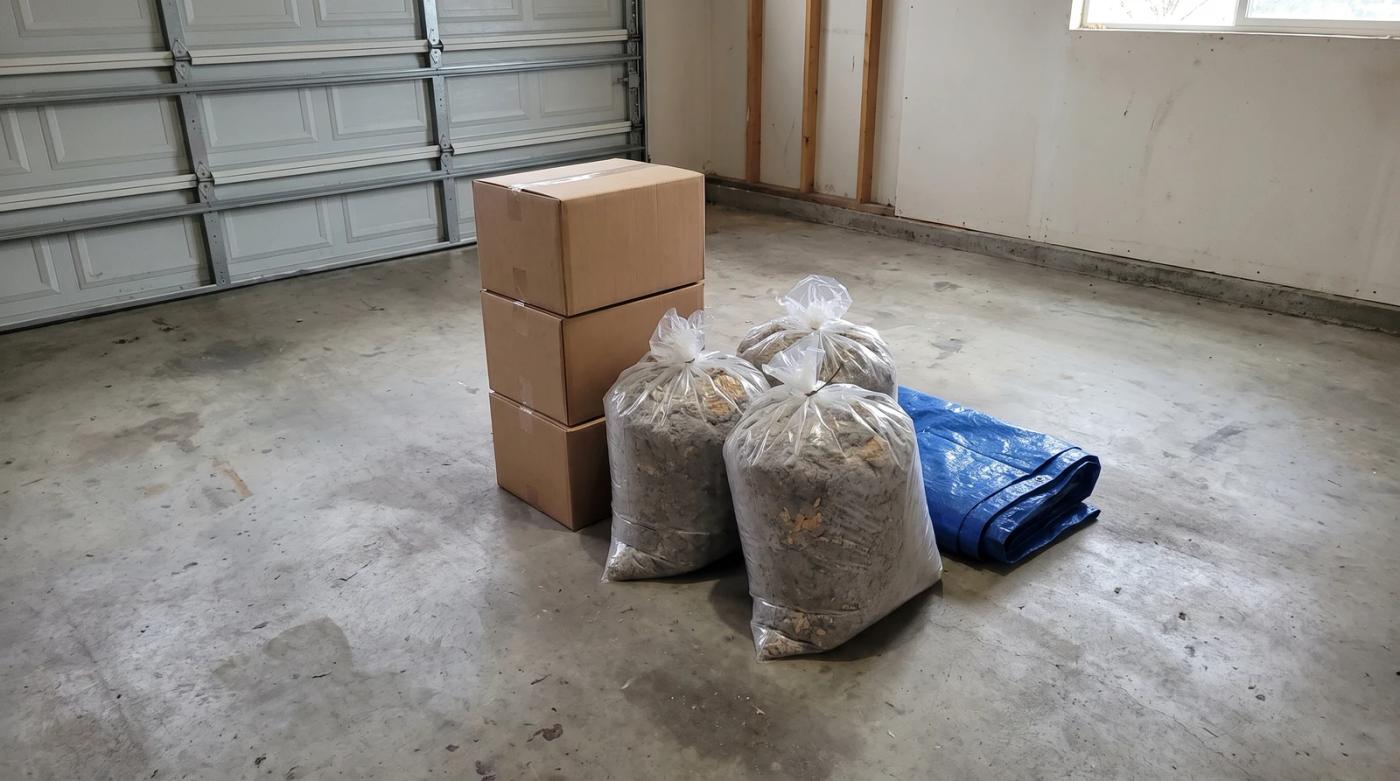
The attic cleanout old insulation Boise question comes down to one thing: a cleanout takes out the stuff you stored up there, and the old insulation only comes out when moisture, mold, rodents or vermiculite have ruined it.
Age alone isn't a reason for removal.
Attic cleanout or insulation removal in Boise: which do you need?
What a standard attic cleanup covers
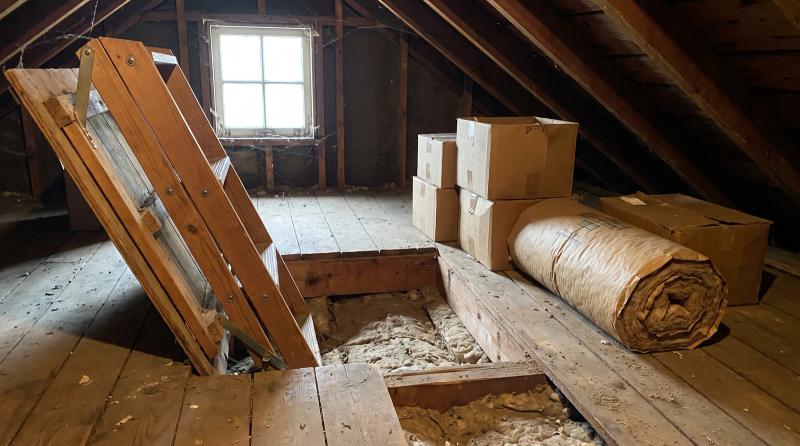
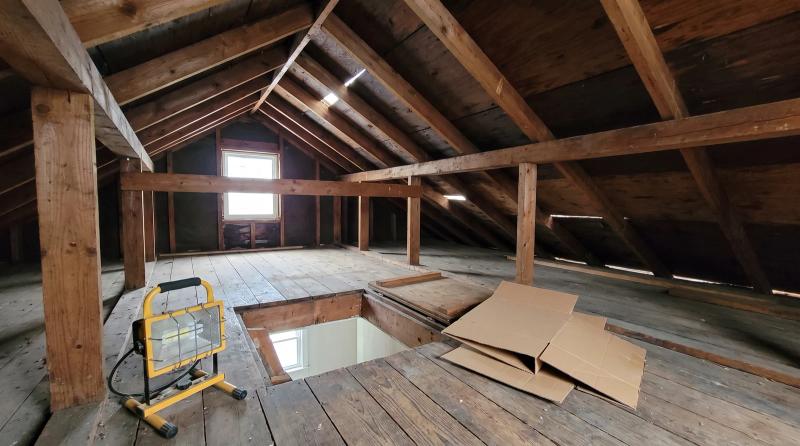
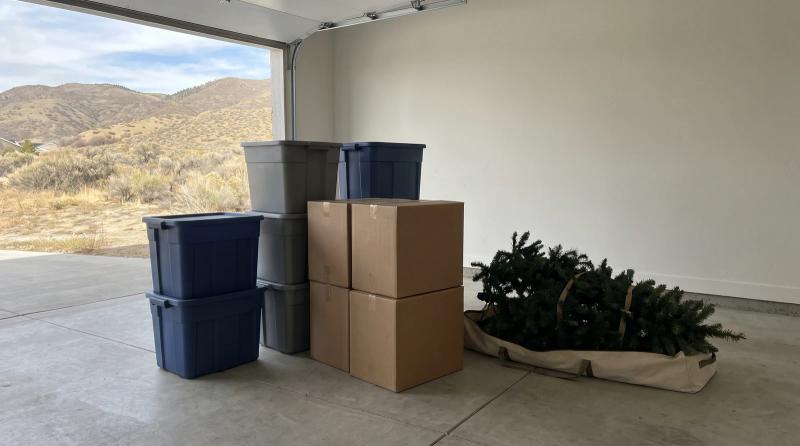
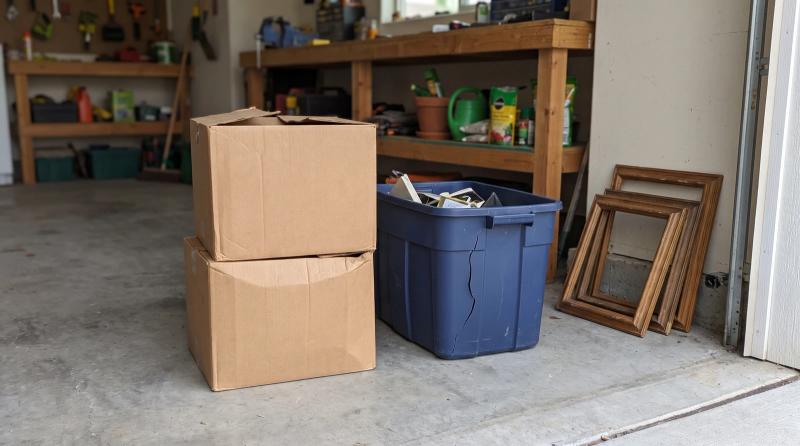
When we quote an attic cleanout, we mean the things you put up there. Boxes, old luggage, holiday bins, old paint cans, anything else stored in the attic.
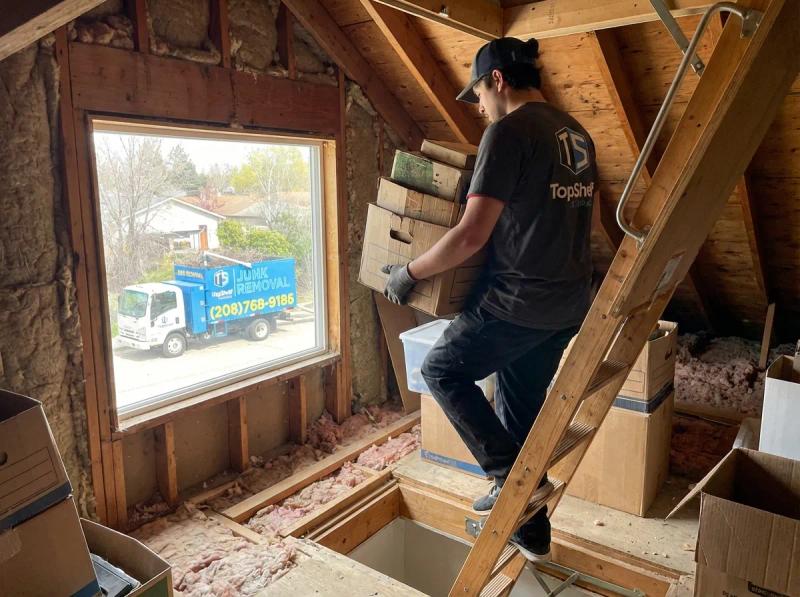
We pull it down, set aside what's donatable, and haul the rest off. How long that takes depends on how much is up there and how tight the attic access is. A plain attic cleanup is mostly carrying and hauling, with some light cleaning at the end.
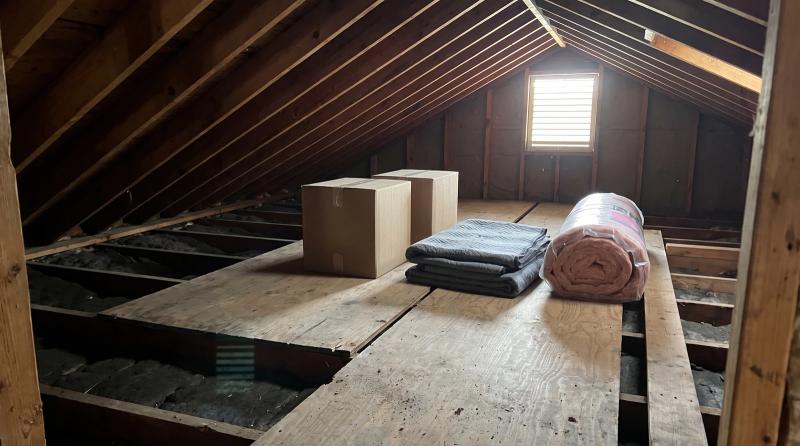
A lot of Treasure Valley homes have blown-in fiberglass over drywall ceilings, and the insulation itself is fine. It's just buried under junk, and getting it out is straightforward work.
Cleanouts are quoted on how much stuff there is, and a tight hatch adds to the work. Insulation removal is a separate job with different equipment, so it's quoted on its own.
When an attic cleanout turns into insulation cleanup
Fiberglass doesn't wear out sitting still. What gets into it is what shifts the job from junk removal to cleanup.
Common reasons it has to go:
- Rodents. Mice and squirrels tunnel through blown-in and leave droppings and urine behind. Once it's soaked, cleaning won't save it. It comes out, and the cleanup includes sanitizing the wood framing underneath.
- Roof leaks. Wet cellulose packs down into a mat and can stay damp a long time under the roof sheathing. Damp material grows mold, quits insulating, and can start rotting the wood it sits on.
- Condensation. Bathroom fans that vent into the attic instead of through the roof push warm, wet air up there, which is a real problem in an Idaho winter. That moisture settles into the insulation and the underside of the roof deck.
- Old vermiculite. Older house, and you're looking at gray-brown pebbly stuff instead of pink fluff? Stop and get it tested before anybody touches it.
- You're re-insulating anyway. If you're adding depth to hit modern R-values, stripping it and blowing fresh replacement insulation sometimes beats burying the old material.
None of those apply? Leave it alone. Paying for the removal of good insulation just to replace it with the same thing is money better spent elsewhere.
Heads up: If there are rodent droppings up there, don't sweep or dry-vac with a shop vac. Stirring that dust up is how people get sick. Mist the area with a bleach-and-water mix, wear an N95 at minimum, and let a crew with sealed equipment handle the bulk of the cleanup. Rodent cleanup is the one job where shortcuts really cost you.
Is it okay to leave old insulation in the attic?
Yes, if it's dry, clean and still fluffy. Old insulation that's only dusty can stay, and new material can go right on top of it.
It's not okay to leave damaged insulation in place. Anything wet, matted, full of droppings or growing mold is due for removal before new material goes in, or the problem just gets buried.
Here in Idaho, it comes down to two checks: is it free of moisture, and is it clean? If both answers are yes, leave it and save the removal money.
Does attic insulation get moldy?
Insulation itself isn't food for mold, but the dust, debris and wood around it are. Add moisture and you've got what mold needs.
Even in dry southern Idaho, moisture gets in: a leak around a vent pipe, snow melting at the roof edge, or fans dumping steam into the space instead of outside.
Signs to look for: dark staining on the underside of the roof deck, black mold spots on the wood rafters, a musty smell at the hatch, or insulation that feels damp or crusty.
If you find mold, fix the moisture source first. Mold removal without stopping the water just means doing it twice. A mold removal company handles the wood surfaces, and hauling out the damaged insulation, the cleanup and any junk in the way can be a separate job.
Good to know: Attic mold removal and hauling out the old insulation are often two different trades. Ask who does what before work starts, so nothing gets left half done.
Blown-in loose fill vs. batts
A lot of Boise homes have blown-in loose fill insulation, either fiberglass or cellulose. Loose fill gets vacuumed out through a big hose into bags or a collection unit outside.
Batts are rolled blankets laid between joists, pulled by hand and bagged. They're easier for DIY, but they hide mold on the wood below better than loose fill does, so lift a few and look.
What is the average cost to remove attic insulation?
There isn't one honest average. The removal cost depends on what's up there and how hard it is to reach.
| Factor | What moves the price |
|---|---|
| Square footage and depth | More area and deeper material mean more bags and more time on the hose |
| Contamination | Droppings or mold mean sealed bags, protective gear and extra cleaning |
| Moisture damage | Wet material is heavier and slower to bag |
| Access | A small closet hatch or a low roof pitch slows the work down |
| Junk on top | Stored items come out first, so the cleanout and removal happen together |
| Cleanup after removal | Sanitizing and cleaning the framing adds labor |
| Mold removal by a specialist | A separate trade, billed on its own, if the sheathing needs treatment |
The cleanup side gets overlooked. Once the old layer is out, the joists need cleaning before anything new goes in, and that work belongs in the quote.
Old insulation generally isn't recyclable. Western Recycling takes the metal and cardboard that comes out of a cleanout, Idaho Youth Ranch takes the household goods still in decent shape, but the insulation gets bagged and goes to the Ada County landfill. Inside the city or out in Canyon County, it ends up in a landfill.
Can you do the insulation cleanup yourself?
You can rent an insulation vacuum locally, but here's where it goes sideways.
The hose is wide and stiff, and you're dragging it through tight headroom while balancing on joists. Add the heat in an Idaho attic in July and the math falls apart fast. Summer is the worst window for attic work.
Know whether your attic floor holds weight before you go up. A boot through a bedroom ceiling turns a Saturday project into a drywall bill.
If you do the cleanup yourself, this order keeps the mess contained:
- Clear stored items out first so you have room to work.
- Seal the hatch below with plastic, and wear an N95 or better, goggles and gloves.
- Bag the old material as you go and keep the bags tied off for removal.
- Finish with a light cleaning of the framing, and look hard for mold or moisture stains before anything new goes in.
- Check that bath fans vent outside before the new layer goes in, so the work isn't wasted.
The cleanup at the end is where a lot of DIY jobs stall. Common mistakes to avoid:
- Blowing new insulation over material that still holds moisture or mold.
- Skipping the cleanup of droppings on the framing under the old layer.
- Treating mold removal as a one-time cleaning while the roof is still letting water in.
- Covering bath fan vents with new material, which traps moisture right back in the space.
DIY makes sense for a small batt removal in a space you can stand up in. It stops making sense the second rodents, mold or water are in the picture.
Bottom line on attic insulation cleanup
An attic cleanout gets your stuff out. Pulling the insulation is its own job, needed only for contamination, moisture damage, mold or vermiculite, plus a proper cleanup once it's gone. Age alone isn't a reason, and removal only makes sense when there's a real problem to fix.
Not sure which camp you're in? A free on-site estimate will tell you straight. Top Shelf Junk Removal and Demolition does attic cleanouts all over Boise, Meridian, Nampa and the rest of the Treasure Valley, and we'll tell you if the insulation needs a separate removal job. Call (208) 593-2877 for a free estimate.
Frequently asked questions
How long does blown insulation last in your attic?
Blown fiberglass insulation doesn't break down much on its own, so it can last a long time if it stays dry and nothing nests in it. Checking it now and then for moisture and mold is the easy way to catch trouble early.
How do you clean old insulation from an attic?
There's no real cleaning it in place. You vacuum out the damaged material, sanitize the framing, then blow in fresh replacement insulation. Cleaning up after mold or droppings is messy work, so a lot of people hire it out.
Does replacement insulation go in after the insulation cleanup?
Yes, but only after the moisture problem is fixed and any mold removal is finished. New material over a wet roof deck just starts the problem over.
Do you need a separate attic cleanup first?
Related reading: Rental Turnover Cleanout in Boise: Clearing Out Between Tenants and Cleanout Old Medications and Sharps Boise: Kiosk and Idaho Tips.
If there's stuff stored up there, yes. Junk removal comes first so the crew has room to work, then the insulation cleanup starts.
Need Help With Attic Cleanout?
Top Shelf serves Boise and the Treasure Valley with professional junk removal, cleanouts, and demolition services.