
Attic Cleanout for Heat Damaged Items in Boise: What to Save or Toss
By Eric Hinderager, owner of Top Shelf Junk Removal and Demolition · Updated
Attic cleanout for heat damaged items in Boise: what survives an attic summer, what to toss, where it goes, and how old insulation comes out safely.
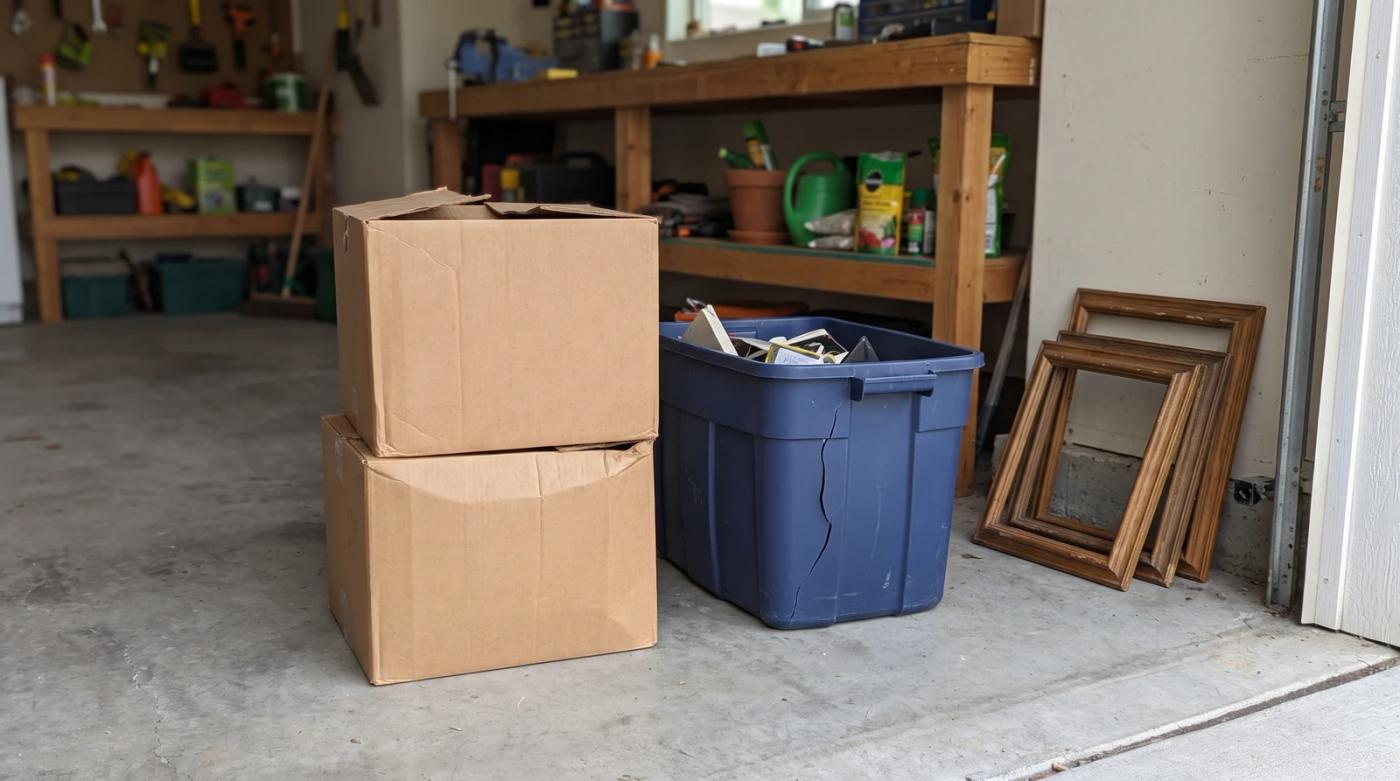
An attic cleanout for heat damaged items in Boise comes down to three things: bring everything down before you sort it, save the personal stuff, and let the melted, warped and cracked things go.
Wax candles are a good example. A box of wedding candles can turn into one solid slab of wax stuck to the bottom of the box, with a few wicks poking out.
Honestly, that's pretty normal for a Boise attic. Stuff goes up there "just for now," then sits through years of southern Idaho summers. By the time someone opens the boxes, a lot of it isn't what they remember.
How hot does a Boise attic get, and what does it do to stored stuff?
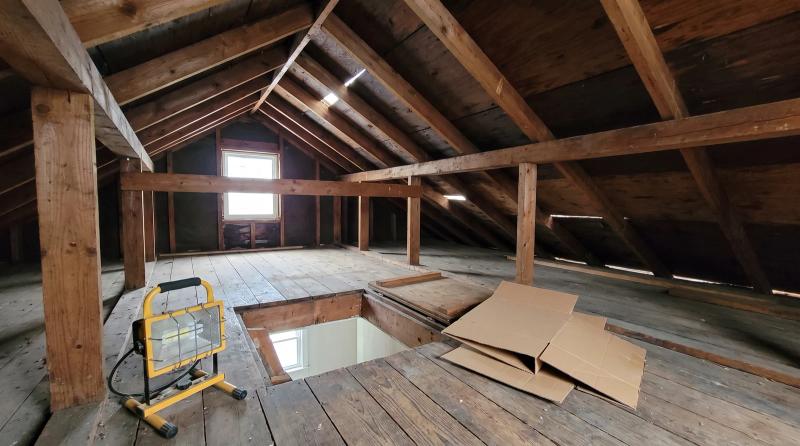
Hotter than most people guess. On a hot July day, a typical attic in Boise or Nampa sits a lot hotter than the air outside. A dark roof or bad ventilation pushes it higher.
Then an Idaho winter flips it, and that same attic can stay below freezing for long stretches.
Idaho's dry climate does help in one way. You're less likely to find the soggy, moldy boxes people deal with in humid parts of the country.
The trouble is that dry heat and big temperature swings are rough on anything made of plastic, glue, wax, film, or wood. Stuff doesn't rot up there. It warps, cracks, melts, and goes brittle.
What holds up in the heat and what doesn't
Attic boxes tend to follow a pattern. Here's the rough breakdown.
| What's in the box | How it usually holds up | What we usually do with it |
|---|---|---|
| Metal and glass holiday decorations | Mostly fine, just dusty | Keep, or donate to a local thrift store |
| Photos, slides, and old papers | Curled, faded, sometimes stuck together | Set aside for you to go through |
| Candles, crayons, VHS tapes, vinyl records | Melted or warped | Usually the landfill |
| Old electronics and battery toys | Batteries swollen or leaking | Pull the batteries, recycle the rest |
| Wood furniture and picture frames | Loose joints, peeling veneer | Depends on the piece |
A few things surprise people. Plastic storage bins seem like the safe bet, but after years of heat a lot of them get so brittle they crack when you pick them up. Cardboard dries out and splits at the seams.
Clothes usually make it if they were sealed up, though they'll smell like attic for a while. Leather jackets, baseball gloves, and old purses tend to crack. Kids' artwork on construction paper can fade to almost nothing.
Anything chewed by rodents goes in the damaged pile.
Attic cleanout for heat damaged items in Boise: how to sort it
This is where people get stuck. Your mom's photos are curled up and fused together, and now you have to decide what to do with them.
Our advice? Don't sort anything in the attic. Nobody makes good decisions crouched under rafters when it's that hot up there, which is a big reason to skip July for attic work if you can.
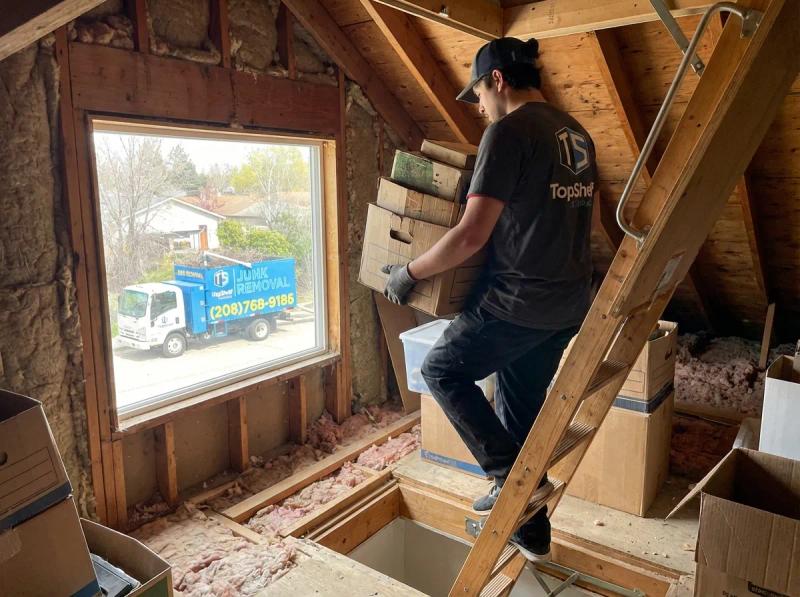
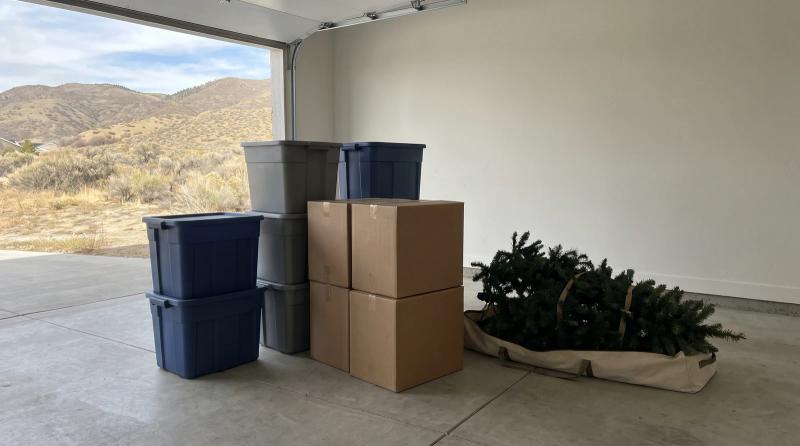
Bring it all down to the garage or driveway and sort it there. That's the easiest way to run any attic cleanout. Everything comes down, anything that looks personal goes in its own pile, and you look it over before a single box gets hauled off.
A simple way to split it up:
- Keep for later: photos, letters, documents, anything with a name on it
- Donate: holiday stuff, dishes, tools, and anything else still in decent shape
- Recycle: metal, electronics, and clean cardboard
- Toss: anything melted, warped, cracked, or chewed
If photos are stuck together, don't try to peel them apart dry. You'll tear the image. A photo restoration shop can often separate them, and it's worth a call if those pictures matter to you.
If a box is chewed up or you spot droppings, put on gloves and a mask before you touch it. Droppings change how you handle everything in that box, so keep it closed and carry it out in one piece.
Heads up: Old aerosol cans and swollen batteries are two things to watch for in a hot attic. Don't puncture the cans, and don't toss puffy lithium batteries in your trash cart, because they can start fires in garbage trucks. Set them in a box away from anything flammable and drop them at Ada County's household hazardous waste site.
Where everything from an attic cleanout goes
Most attic loads split up better than you'd expect.
Old box fans, lamp bases, and Christmas tree stands are mostly metal, so they can go to a scrap metal recycler. Decorations, small furniture, and household goods that still work can go to a thrift store like Idaho Youth Ranch, and electronics can be recycled.
Whatever's left is usually the melted, cracked, and filthy stuff. In Ada County, that goes to the county landfill in Boise.
Things that are clearly ruined shouldn't be donated. Dropping a cracked bin of warped junk at a thrift store just hands them the job of throwing it away.
Bagged old fiberglass heads to the landfill too.
What's actually safe to put back up there?
Once the attic's clear, you'll probably want to use it again. Just be picky about what goes back up.
Metal and glass decorations, empty suitcases, extra tile, and spare lumber all hold up fine. Photos, important papers, candles, paint, wine, and anything with a battery shouldn't go up there at all.
Here's an easy test. If it would be ruined sitting in a parked car in August, it'll be ruined in your attic too. Same conditions, just for years instead of an afternoon.
How do you get old blown insulation out of an attic?
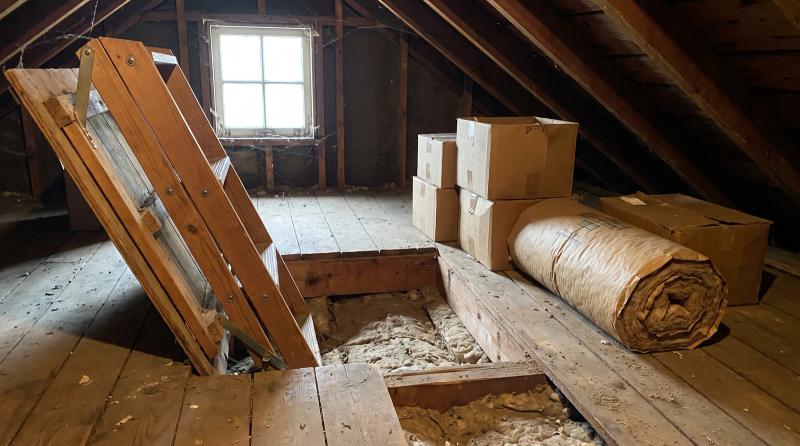
Old blown insulation, also called loose-fill, usually comes out through an insulation vacuum into large bags.
Doing it yourself is possible, but it's slow, dusty work. Fiberglass irritates skin and lungs, so wear a respirator, goggles and long sleeves, and tape plastic over the hatch so dust doesn't drift into the house. Expect a lot of trips down the ladder, and check with your trash hauler before you set bags at the curb.
Good to know: Pebbly gray-brown vermiculite in older Idaho homes can contain asbestos. Leave it alone and call a trained asbestos abatement contractor.
Rodents are the other big reason it comes out. Insulation that mice or other wildlife nested in is contaminated and has to be removed once pest control is done.
The usual order for attic insulation removal:
- Clear out stored stuff.
- Set up dust control.
- Vacuum out the old insulation.
- Do air sealing, then add new insulation.
Insulation removal vs. attic restoration
Attic insulation removal means the old stuff comes out. Attic restoration adds removal of damaged materials, cleanup and new insulation, like spray foam. If animals got in, a wildlife control company can seal the entry points.
A real fire is different. Smoke damage soaks into wood, so a fire restoration company should finish the restoration, smoke and soot cleanup, and water damage remediation first.
How much does it cost to remove old blown-in insulation from an attic?
There's no single answer. The price moves with:
- Size and depth: more square feet or a thicker layer means more bags.
- Access: a small hatch or low roof slows the work.
- Contamination: removal of damaged materials, like insulation full of droppings, takes more care and dust control.
- What's still up there: a packed attic has to be cleared before anyone can get to the insulation.
- Disposal: loose insulation is light but bulky, so it fills a truck faster than you'd think.
Bottom line: your attic isn't a storage unit. It's more like an oven that turns into a freezer every winter, so most things that sat up there for years come down in worse shape than they went up.
Save the personal stuff, donate what still works, and let the rest go.
If it's just a handful of boxes, you can probably knock it out yourself on a cool morning. Yes, we'd happily take the job, but you really don't need us for that.
Bigger clean outs are a different story. Clearing a packed attic is part of our cleanouts work, and we cover the Treasure Valley, including Boise, Meridian, and Nampa. Pricing is by volume, based on how much truck space it all takes up, and the estimate is free.
If you'd like to schedule your attic cleanout, give us a call at (208) 593-2877. We'll tell you straight what it'll take.
Frequently asked questions
What sets the cost of new insulation?
Square footage, insulation type, depth and access. A bigger attic needs more material and more labor, so get a quote for your actual size instead of going by a general figure. Idaho's cold winters make depth worth asking about.
What about old paint and aerosol cans?
Don't puncture them. Take them to Ada County's household hazardous waste site, and check their current hours before you go.
Is insulation with mouse droppings safe to keep?
The Cleanouts page covers what the service includes and how the estimate works.
Related reading: Professional Cleanout Team: What They Do and How to Choose One and Whole House Clean Out Services: What's Included, the Process and Cost.
No. Soiled insulation can't really be cleaned, so it's removed in sealed bags. Wear gloves and a respirator while it comes out.
Need Help With Attic Cleanout?
Top Shelf serves Boise and the Treasure Valley with professional junk removal, cleanouts, and demolition services.