
Carpet Removal in Boise: What About Tack Strips and Staples?
Pulling carpet is quick. Tack strips and staples aren't. Here's what carpet removal really takes in Boise, what to pull, what to leave, and what it costs.
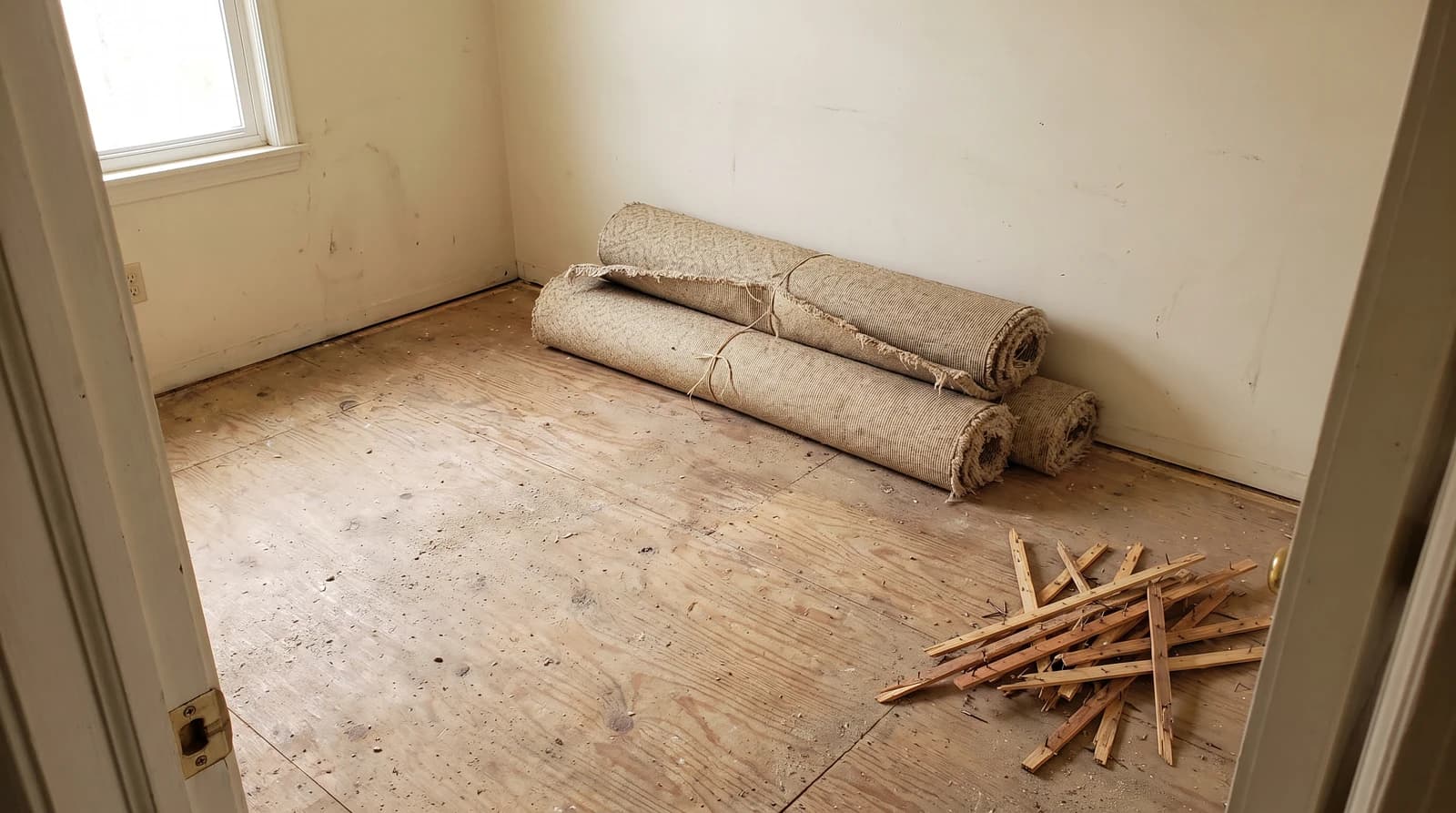
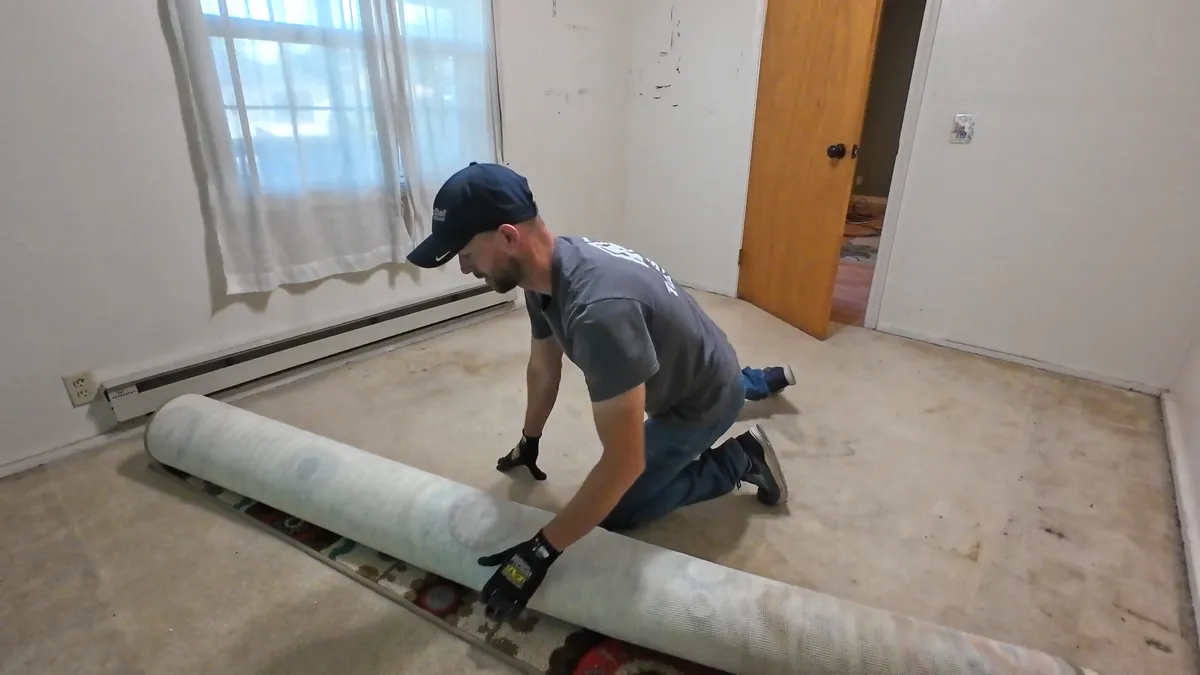
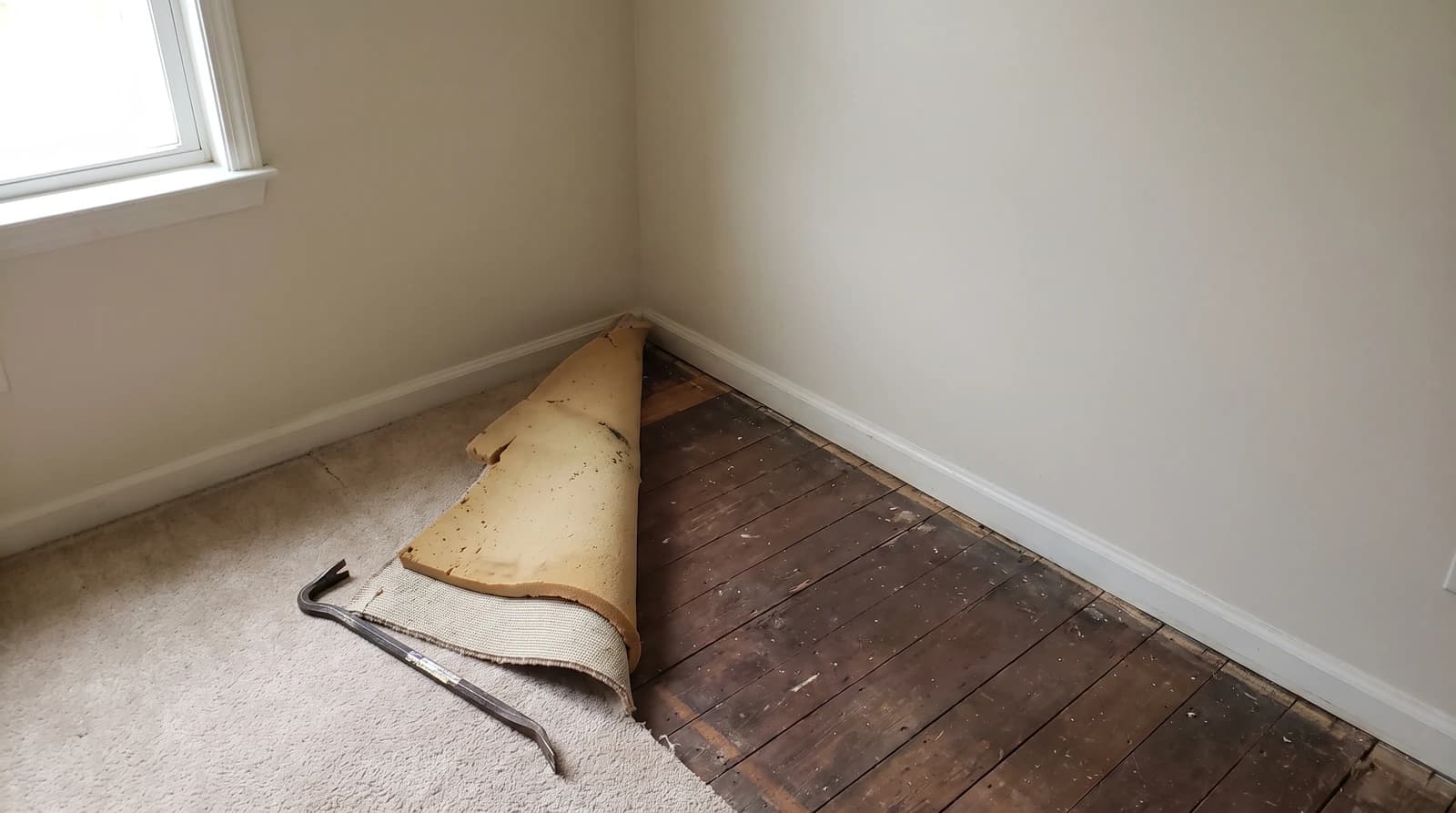
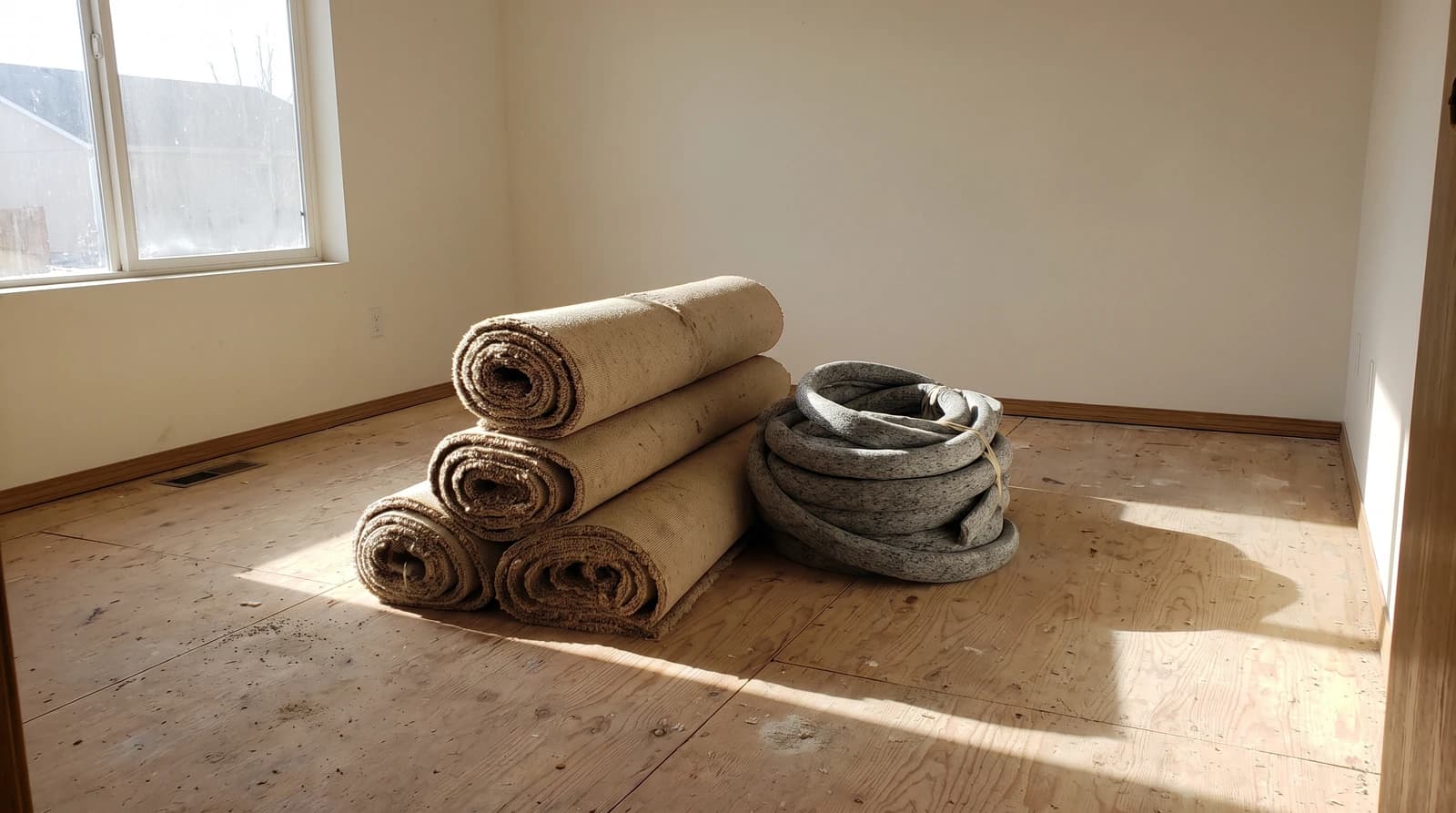
The carpet itself is the easy part. Score it into three-foot strips, roll them, carry them out. Twenty minutes in an empty bedroom, and you'd swear carpet removal is the simplest job in the house.
Then you stand up and look down. A plywood subfloor speckled with a few hundred staples, and a perimeter of nailed-down wood strips bristling with little spikes.
That's the part nobody plans for. We pull carpet all over Boise, Meridian, and Nampa, and when a job runs long it's basically never the carpet. It's the leftovers.
Why carpet removal slows down once the carpet's out
Under your carpet is a layer of foam padding, and it's stapled to the subfloor every four to six inches. Not glued, not tacked at the corners. Stapled over and over by someone who got paid to make sure it never moved.
Most Boise-area homes built between the late 70s and the mid 2000s sit on plywood or OSB, which means staples. In a 12x14 bedroom you're realistically looking at 400 to 800 of them.
They don't all come out clean, either. Some snap. Some sink flush and you're digging them out with the tip of a pry bar.
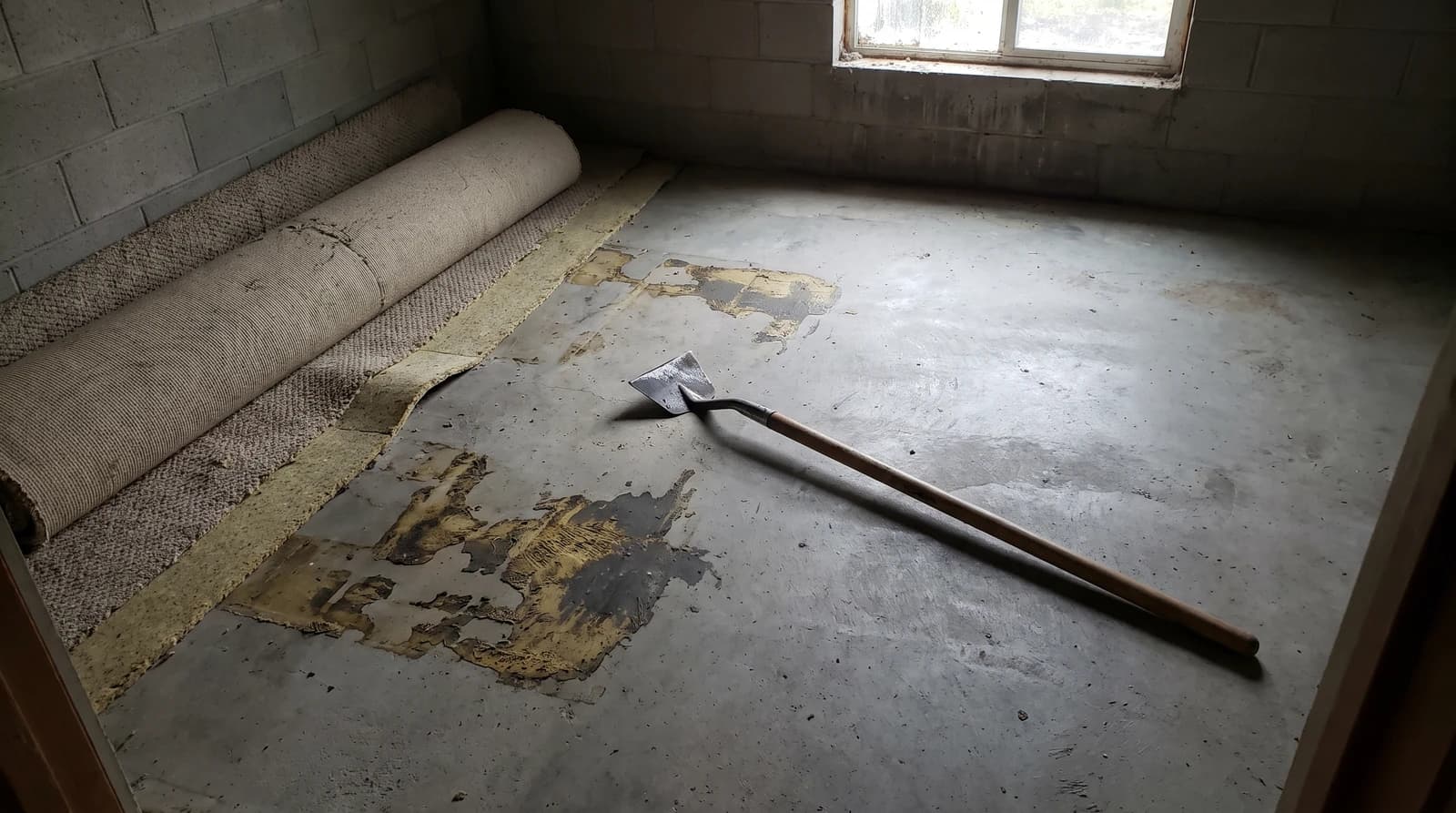
If your place is on a slab, the padding was probably glued instead, which is its own kind of miserable. We got into that one over in why carpet glued to concrete takes longer.
Do the tack strips actually have to come out?
Depends on what's going down next.
New carpet in the same room, strips still solid and dry and not rusted? Leave them. Your installer will swap the few that need it, and that saves everybody an hour.
Going to LVP, laminate, engineered wood, or tile? All of it has to come out. A quarter inch of wood with nails in it will telegraph up through a floating floor and chew the underlayment over time. Worth sorting out before your flooring crew shows up, which we walk through in our guide on carpet removal before new flooring.
Doorways and closets are where it gets fussy, since the strips get nailed in tight against the jamb. Concrete slabs are worse. Those nails are hardened and they snap off below the surface more often than not, so you grind the stub flat instead of fighting it.
Staples are the real time sink
Three ways to do this, and none of them are fun.
End-cutting nippers or a decent pair of needle-nose pliers pull the cleanest. You get every staple. You're also on your knees for 45 to 90 minutes a room.
A long-handled floor scraper saves your back and moves a lot faster, but it skips maybe one in ten and leaves bent stubs behind.
Then there's the oscillating multi-tool with a flush blade, which shears them off level with the subfloor. Fine under carpet. Fine under most LVP. Not great under sheet vinyl, where every stub eventually shows.
So how perfect do you need to be? Depends on the next floor. New carpet and pad swallow a few stubs without complaining, but a floating vinyl plank floor will find every one and click at you for years.
Handful of things that genuinely help if you're doing it yourself:
- Real knee pads, not folded-up towels
- A 5-gallon bucket for staples so they don't end up in a tire or a dog's paw
- A cheap magnetic sweeper for the final pass
- A shop vac, because the dust under 20-year-old padding is a whole thing
That last one sneaks up on people. Old padding breaks down into a fine orange grit that gets into everything, and it wrecks allergies in the spring.
What carpet removal costs once you factor in the staples
Here's roughly how the labor shakes out on a typical Treasure Valley job. Times assume the room's empty and you're moving at a normal pace, not a pro's.
| Task | DIY time (per room) | Typical add to a pro job |
|---|---|---|
| Cut and roll the carpet | 20-30 min | Included |
| Pull the padding | 10-15 min | Included |
| Pull staples | 45-90 min | $40-$75 |
| Remove tack strips | 20-30 min | $25-$50 |
| Haul and dump | 1-2 hrs round trip | Included |
Most whole-house carpet removal jobs we run land between $400 and $900, depending on square footage, stairs, and how clean the subfloor needs to be. Stairs are their own animal, since every tread has strips on two edges.
One more thing on disposal. Carpet and padding aren't recyclable around here in any practical way, so Western Recycling won't take it, Idaho Youth Ranch definitely won't, and it ends up buried at Hidden Hollow at the Ada County Landfill.
Budget a real trip if you're hauling it yourself. A single room of carpet and pad fills a pickup bed faster than you'd guess.
Bottom line
Pulling carpet is a Saturday morning. Pulling staples and tack strips is the rest of Saturday, and it's the half that decides whether your new floor sits flat.
Yes, we'd love the whole job. But if you want to do the fun part and hand off the knees-on-plywood part, that's a fair split and we'll take the back half.
Either way, give us a call at (208) 593-2877 and tell us what's going down next. That's really what decides how far we take it.
Need Help With Carpet Removal?
Top Shelf serves Boise and the Treasure Valley with professional junk removal, cleanouts, and demolition services.