
Attic Cleanout in Boise: Is Your Attic Floor Safe to Walk On?
Most Boise attics have no real floor, just joists and drywall. Here's how to check before your attic cleanout, and what it costs when you guess wrong.
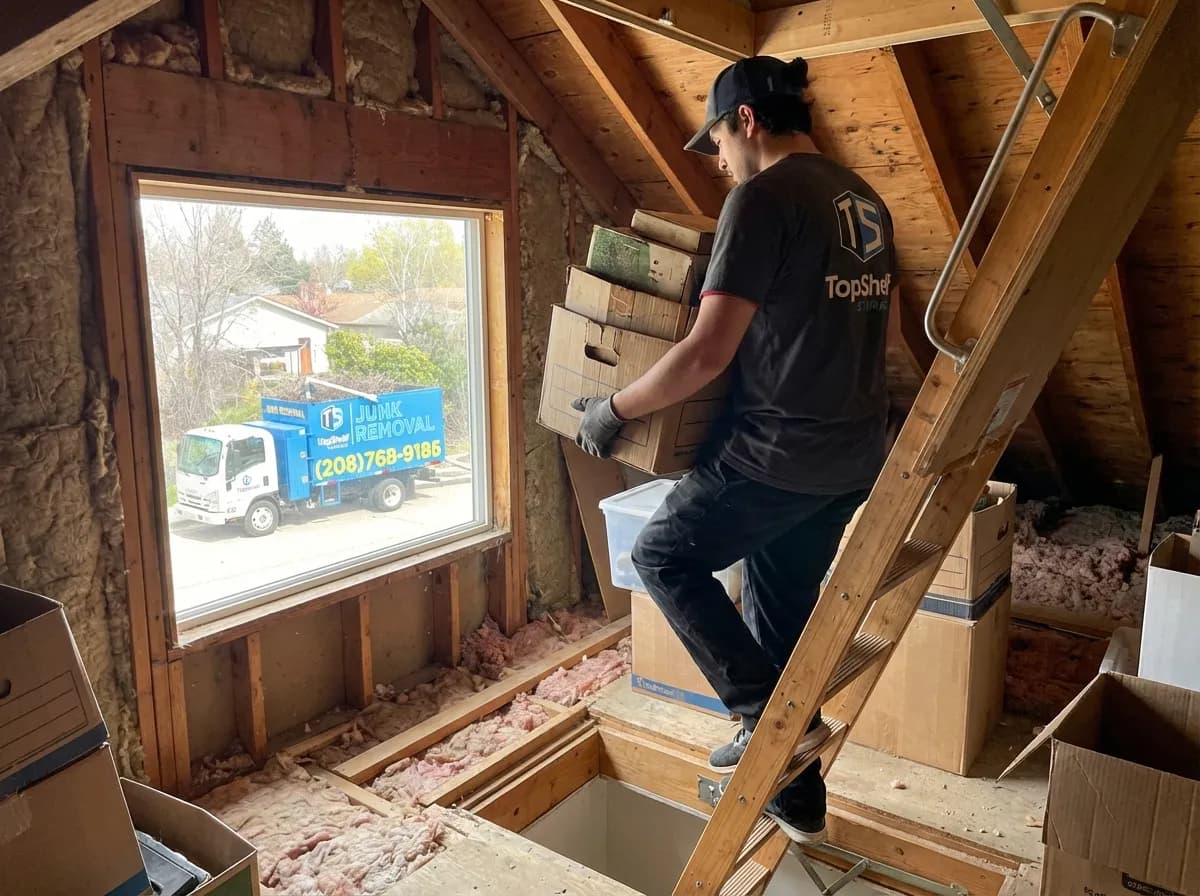
A guy in Star called us last October after his boot came through his daughter's bedroom ceiling. He'd climbed up to start an attic cleanout before the holidays, stepped off a joist onto bare drywall, and the drywall did what drywall does.
He wasn't being careless. He was doing what most people do up there: moving fast in a dark, hot space with a tote in both hands.
Patch, texture match, paint. Ran him a few hundred bucks. The repair cost more than the cleanout would have.
So before you drag anything out of yours, the first question isn't what to keep. It's whether the spot you're about to stand on will hold you.
Most Boise attics don't actually have a floor
Walk into a finished basement and there's a floor under you. Climb into a typical Treasure Valley attic and there usually isn't one.
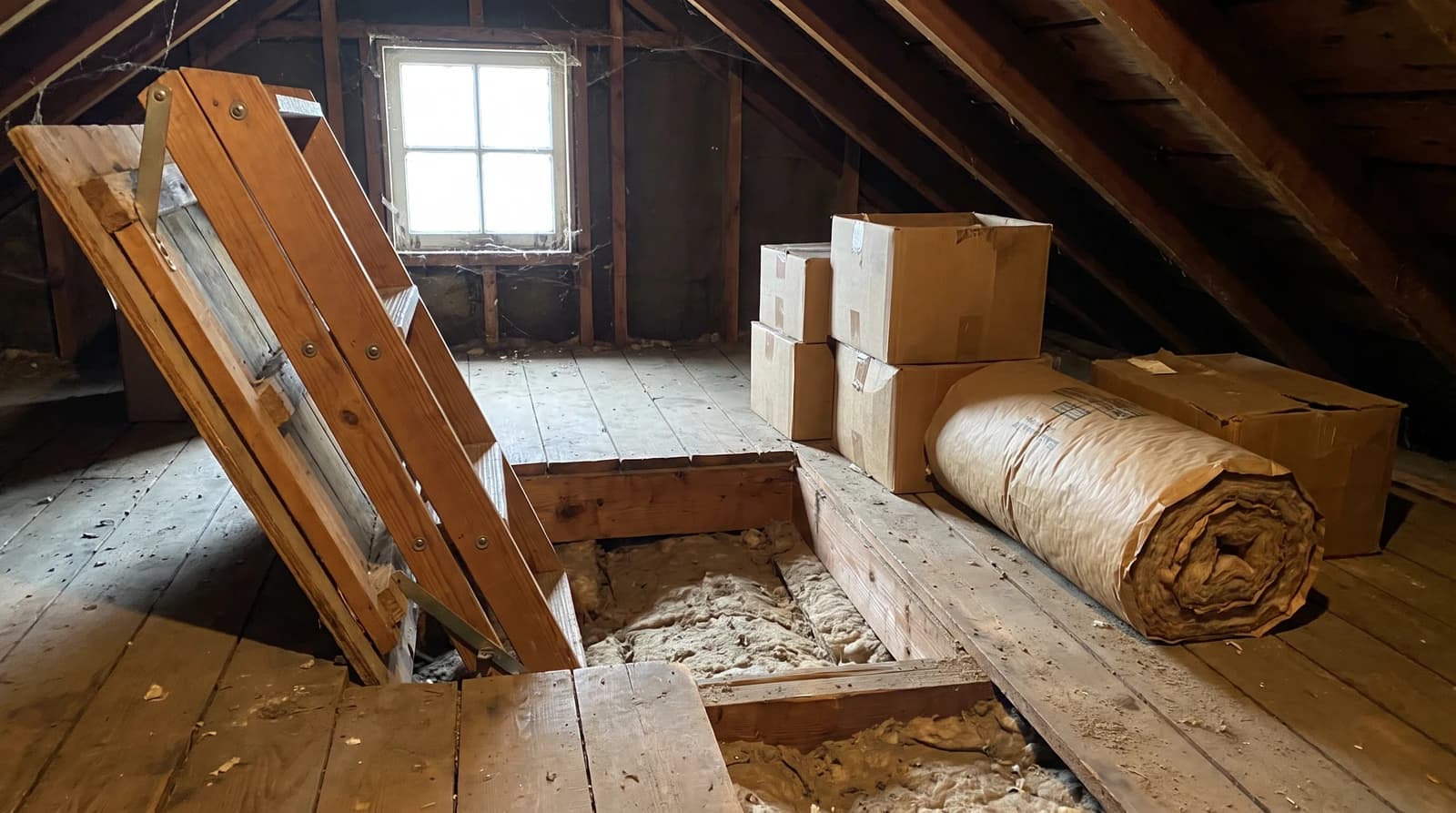
What you've got is ceiling joists, insulation packed between them, and half-inch drywall stapled to the underside. That drywall isn't structural. It's the ceiling of the room below, and it holds about as much weight as a wet paper plate.
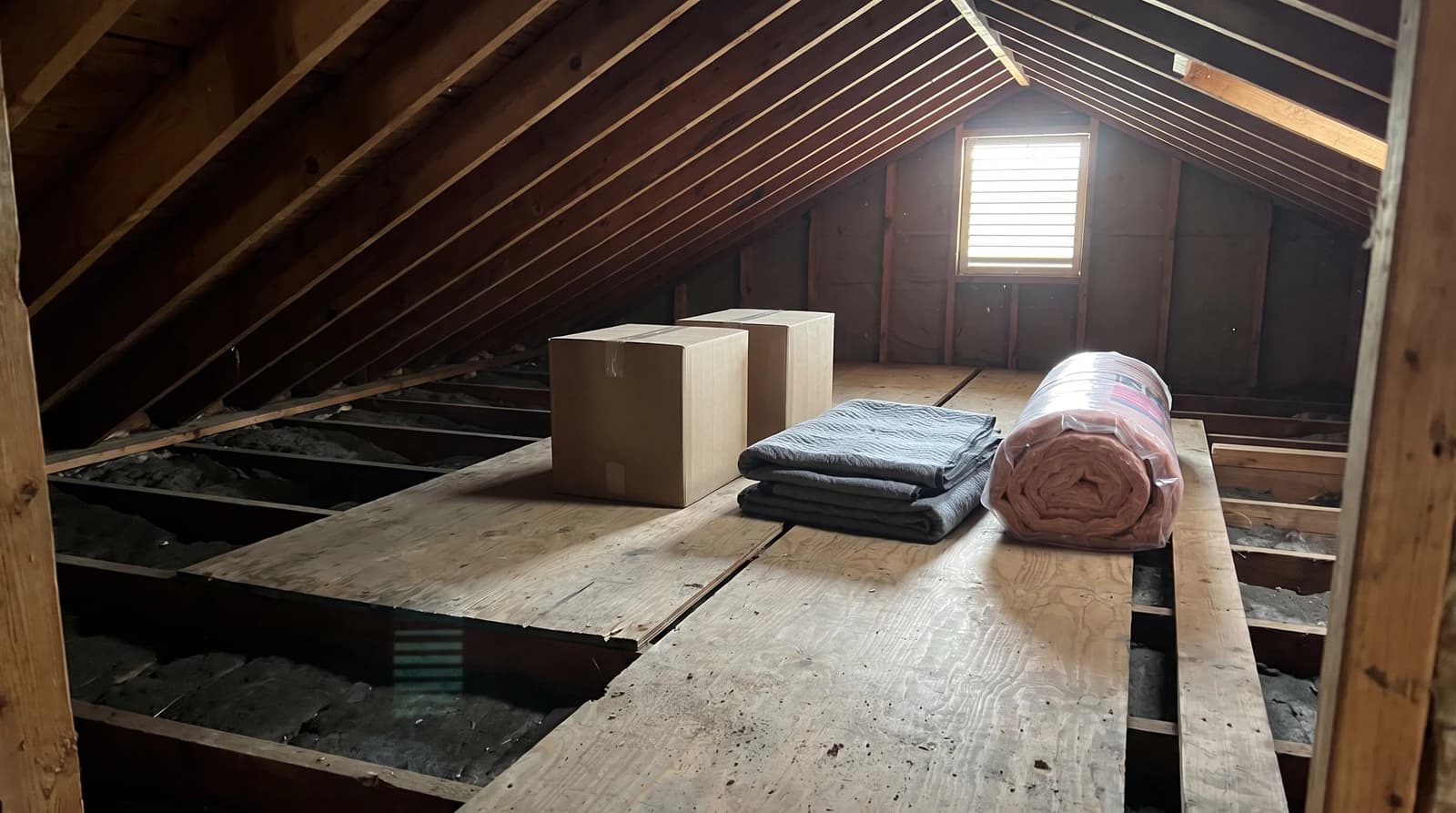
In newer subdivisions around Meridian, Nampa, and Kuna, you'll usually find trusses at 24 inches on center with blown-in fiberglass laid across the whole thing.
The insulation looks like a surface. It isn't. And you can't see the joists underneath it, which is the actual problem.
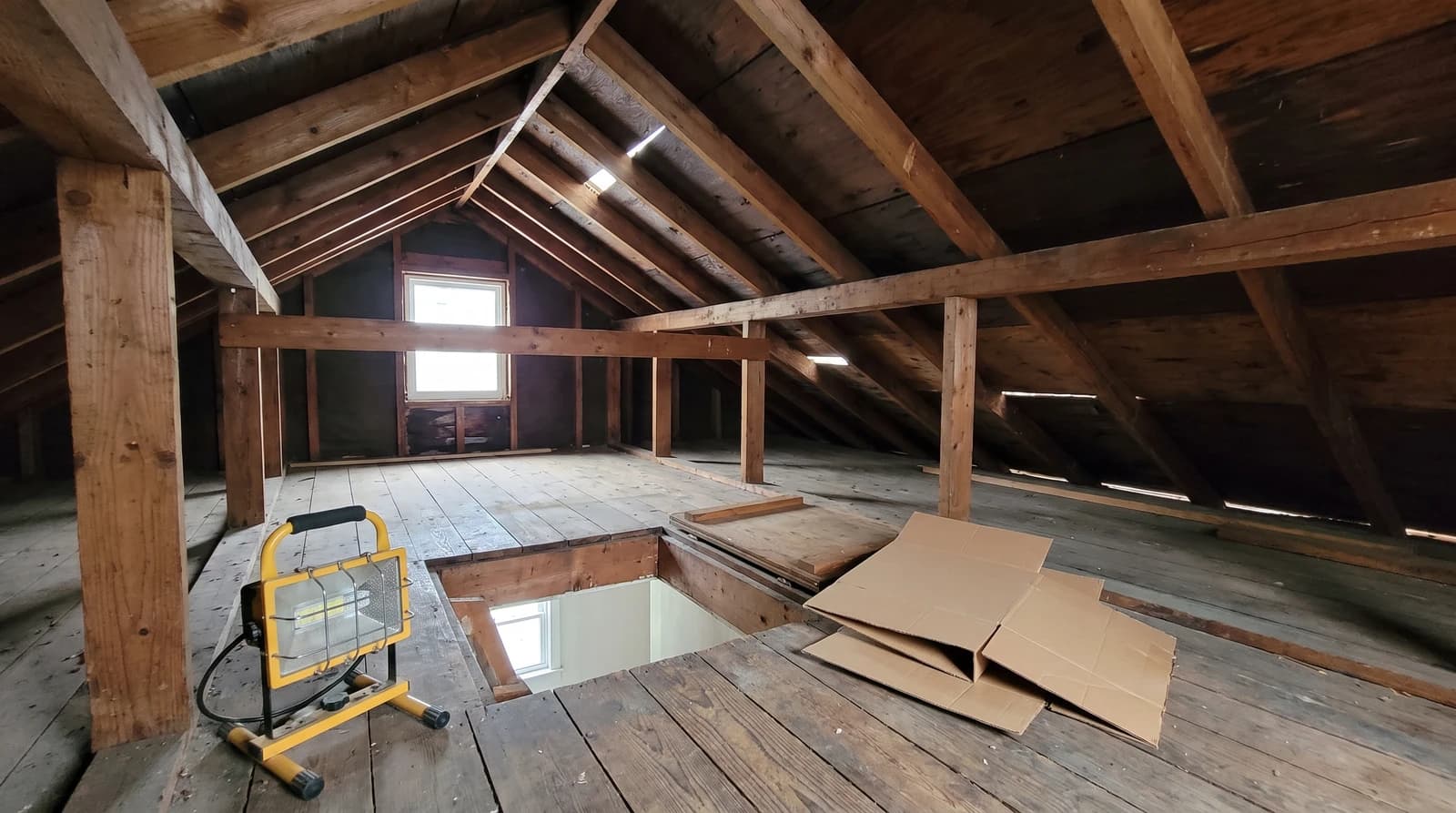
Older Boise houses run different. The 1940s and 50s places in the North End and on the Bench often have real 2x6 or 2x8 joists at 16 inches, sometimes with a partial plank floor near the hatch. Easier to walk, sure, but those planks get brittle and the nails have had eighty years to work loose.
Quick checks before you start an attic cleanout
You don't need an inspector for this. Five minutes with a flashlight tells you most of it.
- ✓Look for solid decking, meaning plywood or OSB screwed down, not loose scraps laid on top of the insulation
- ✓Check whether that decking actually reaches the stuff, or just covers the first few feet by the hatch
- ✓Tap around with a broom handle to find your joist spacing, so you know your step length before you're committed
- ✓Look up at the roof sheathing for dark staining or daylight, which means water's been getting in
- ✓Note where the ducts and wires run, because those are what people catch a foot on
Decking stops three feet past the hatch and there are twelve boxes sitting out in the blown-in? That's your answer. Not a walk-on attic.
Making an attic cleanout safer without decking the whole thing
You don't have to build a floor to empty an attic. Rip two sheets of half-inch plywood into 16-inch strips and you've got plank runs you can lay across the joists and leapfrog as you work. Lumberyard trip, maybe forty bucks.
Lay two side by side. Then you always have somewhere for both feet plus somewhere to set the box down. Never set anything on the insulation. If it's on insulation, it's on drywall.
Keep your hands free where you can. Slide boxes along the planks toward the hatch instead of hauling them across open joists. Almost every fall we hear about happened while somebody's arms were full and they couldn't see their feet.
Light matters more than people think. A headlamp plus a work light bounced off the roof deck beats a phone flashlight by a mile, and half of stepping wrong is just not seeing where the joist is.
One thing on timing. Attics in the valley hit 130 degrees on a July afternoon, and heat is what makes people hurry and get sloppy. We got into that more in our post on when to schedule an attic cleanout in Boise. Short version: spring or fall, and go in the morning.
What the job looks like when there's no decking
When we get up there and find bare joists, the job changes shape. Slower, not impossible.
We bring our own plank runs and set them as we go, which is why an undecked attic takes longer than a decked one holding the same amount of stuff. Couple hours for a small load off plywood. Half a day or more when every trip means moving boards first.
That time difference is most of what drives the spread you'll see in our attic cleanout cost breakdown. Most of the ones we do land somewhere between $400 and $900.
Sorting happens downstairs, not up in the dark. Usable furniture, holiday decor, and household goods go to Idaho Youth Ranch. Metal shelving, old ductwork, and window units go to Western Recycling. Wet cardboard, ruined insulation, and anything a mouse has been living in goes to the Ada County landfill, because nobody wants that donated.
So should you hire it out? If your attic's decked and there's a reasonable amount up there, probably not. Do it yourself and keep the money.
Where calling somebody makes sense is bare joists, contaminated insulation, or a load big enough that you're looking at twenty trips down a ladder. That's the situation our attic cleanout service is built for.
And if you're not sure what you're even looking at up there, the attic cleanout guide covers the usual finds.
Bottom line
Insulation is not a floor. Find the joists before you trust them, lay a couple of planks, and move slow enough to see your feet.
If you'd rather not mess with it, call us at (208) 593-2877 and we'll tell you straight whether it's a Saturday afternoon or a job worth handing off. Either answer is fine with us.
Need Help With Attic Cleanout?
Top Shelf serves Boise and the Treasure Valley with professional junk removal, cleanouts, and demolition services.